
Agentic AI & Multi-Agent System Development
We design, build and run multi-agent systems that make it past the security review.
Book a 30-min callTrusted by enterprises across Europe and the US.



What is a multi-agent system?
A multi-agent system is a set of specialised AI agents, each owning one domain such as planning, retrieval, execution or validation, coordinated by an orchestrator. Unlike a single chatbot or copilot, the agents divide work, check each other's output, act in your business systems, and escalate to a human at defined decision points.
Chatbot / copilot
What it does
Answers questions in a conversation
Autonomy
None, responds only
Systems it touches
Usually none, or read-only
Failure mode
Wrong answer
Best for
FAQ, support deflection
Single AI agent
What it does
Completes one bounded task end-to-end with tools
Autonomy
Acts within one narrow scope
Systems it touches
One or two, via API
Failure mode
Wrong action in one place
Best for
Document processing, triage, drafting
Multi-agent system
What it does
Runs a multi-step business process across systems
Autonomy
Plans, delegates, validates; humans approve at defined points
Systems it touches
Your systems of record: ERP, CRM, core platforms, read and write
Failure mode
Needs orchestration, guardrails and an audit trail by design
Best for
Reconciliation, disruption handling, planning, claims, compliance workflows
Chatbot / copilot
Single AI agent
Multi-agent system
What it does
Answers questions in a conversation
Completes one bounded task end-to-end with tools
Runs a multi-step business process across systems
Autonomy
None, responds only
Acts within one narrow scope
Plans, delegates, validates; humans approve at defined points
Systems it touches
Usually none, or read-only
One or two, via API
Your systems of record: ERP, CRM, core platforms, read and write
Failure mode
Wrong answer
Wrong action in one place
Needs orchestration, guardrails and an audit trail by design
Best for
FAQ, support deflection
Document processing, triage, drafting
Reconciliation, disruption handling, planning, claims, compliance workflows
How a production multi-agent system is actually built
User
Orchestrator
Specialised agents
Retrieval
Analysis
Execution
Validation
Human approval gate
Systems of record
via MCP / API layer
Audit trail: every decision, input and rationale is logged
Orchestrator
Receives the goal and breaks it into tasks.
Specialised agents
Retrieval, analysis, execution and validation each handle their own domain and hand context to the next.
Human approval gate
Before anything is written to your systems of record, the action passes an approval gate appropriate to its risk level.
Integration layer
Agents reach your systems through a controlled integration layer, never through direct database access.
Audit trail
Every decision, input and rationale lands in an audit trail your reviewers can actually read.
What we build
02
Multi-agent systems for operations
Orchestrated agents that run internal processes (reconciliation, planning, triage, claims) across your ERP, CRM and core platforms, with humans approving what matters.
03
Agent orchestration & architecture
Supervisor, swarm or hierarchy: we design the pattern that fits your process rather than the one that is fashionable. Including rescue work on agent systems that stalled after the pilot.
04
AgentOps: evaluation, observability, production care
Evaluation suites, monitoring, cost control and re-evaluation when models change. Agents are not a ship-and-forget product. This is the part most vendors skip.
Autonomy is a dial with five settings
We design every system around explicit autonomy levels. Each process gets the level it can safely carry, and the audit trail to prove it.
In regulated industries, most processes belong at L2-L3, and some should never leave it. For high-risk systems, being able to show who decided what, based on which inputs, is not optional.
L1 · Assist
The agent
Summarises, retrieves, prepares context
The human
Does the work
L2 · Recommend
The agent
Proposes a decision with sources and rationale
The human
Approves every decision
L3 · Execute with approval
The agent
Performs the step after sign-off, logs everything
The human
Approves before anything is written
L4 · Execute within bounds
The agent
Acts alone inside defined thresholds, escalates outside them
The human
Sets the thresholds, handles escalations
L5 · Autonomous
The agent
Operates independently, reports exceptions
The human
Supervises through metrics and audit
L1 · Assist
L2 · Recommend
L3 · Execute with approval
L4 · Execute within bounds
L5 · Autonomous
The agent
Summarises, retrieves, prepares context
Proposes a decision with sources and rationale
Performs the step after sign-off, logs everything
Acts alone inside defined thresholds, escalates outside them
Operates independently, reports exceptions
The human
Does the work
Approves every decision
Approves before anything is written
Sets the thresholds, handles escalations
Supervises through metrics and audit
From first call to production
01
Architecture Discovery
We map your process, systems and constraints. You get a reference architecture for your case, a recommended autonomy level per step, and a prioritised roadmap ranked by business value, whether you build with us or not.
02
Pilot in shadow mode
The system runs in parallel with your current process, on live data, writing nothing. You compare outputs side by side and see exactly where it's right, where it's wrong, and what it costs to run, before it touches a system of record.
03
Production
Integration with your systems through a controlled layer (MCP where possible), approval gates wired to your roles, audit trail switched on, security review passed.
04
AgentOps
Evaluation suites run on every change. We monitor accuracy, latency and cost per task, and re-evaluate the whole system when a model version changes, because a silent model update should never silently change your decisions.
01
Architecture Discovery
We map your process, systems and constraints. You get a reference architecture for your case, a recommended autonomy level per step, and a prioritised roadmap ranked by business value, whether you build with us or not.
02
Pilot in shadow mode
The system runs in parallel with your current process, on live data, writing nothing. You compare outputs side by side and see exactly where it's right, where it's wrong, and what it costs to run, before it touches a system of record.
03
Production
Integration with your systems through a controlled layer (MCP where possible), approval gates wired to your roles, audit trail switched on, security review passed.
04
AgentOps
Evaluation suites run on every change. We monitor accuracy, latency and cost per task, and re-evaluate the whole system when a model version changes, because a silent model update should never silently change your decisions.
See how we've helped our clients
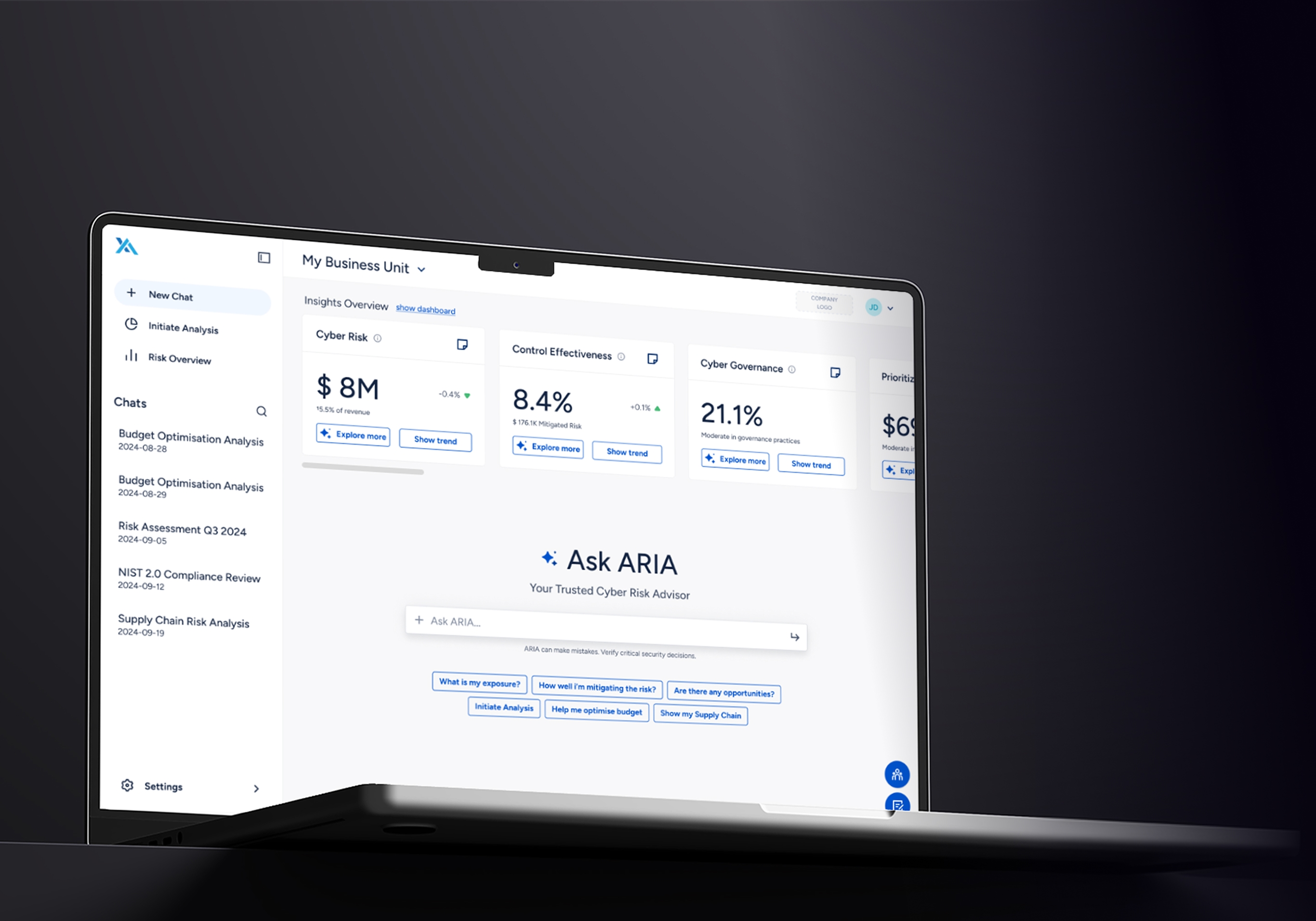
Embedded AI in a cybersecurity platform serving Fortune 500 clients: by embedding a conversational AI layer into the platform, we cut customer onboarding time by 95% and turned a quarterly reporting tool into a daily decision-support system.
Why us
Why enterprises choose us
We're a 50-person, cross-functional software development team based in Warsaw, Poland, building technology that delivers ROI, strong governance, and real adoption.
years delivering digital products
est. 2016
products shipped
web & mobile
experts on board
Product & UX designers, Software engineers, AI specialists, PMs
client NPS
Praised for communication, pace and quality
continents served
North America, South America, Europe, Asia, Africa
Industries we build for
Frequently asked questions
Tell us which process you'd hand to agents first
Tell us about the process, the systems it touches and where it hurts today. We'll tell you whether agents fit, which autonomy level is safe, and what discovery would look like.
Work with a team trusted by Siemens, PwC, and Toyota.

