
AI Agents for Financial Services
We build multi-agent systems for the back office: reconciliation, regulatory reporting, risk triage and underwriting support. With the one feature that decides everything in this industry: a decision trail your supervisor will accept.
Book a free consultationTrusted by enterprises across Europe and the US.



What is a multi-agent system in financial services?
A multi-agent system in financial services is a set of specialised AI agents for reconciliation, reporting, risk triage and customer operations that read and write through core banking and ledger interfaces, coordinate under an orchestrator, and log every decision with its inputs and rationale for supervisory review.
The problems worth automating first
An example agent team: who does what
A multi-agent system works like a team with clear roles. Here's an example lineup for a financial institution:
Ledger / alert event
Orchestrator
Specialised agents
Reconciliation
Reporting
Risk triage
Underwriting
Claims
Approval gates per materiality
Financial systems
core banking · GL/ERP · AML/KYC · policy admin
Supervisory-grade audit trail: every decision, input and rationale is logged
Reconciliation Agent
Matches positions across systems, classifies breaks, and proposes correcting entries, posted to the general ledger (GL) only after approval.
Regulatory Reporting Agent
Assembles the return, validates internal consistency, and flags gaps before submission instead of after.
Risk Triage Agent
Prioritises anti-money-laundering (AML) and fraud alerts and assembles the case context, so your analysts open a complete dossier.
Underwriting Support Agent
Compiles the credit or insurance file, flags what's missing and what looks off. The decision stays with your underwriter.
Claims Agent
Verifies claim completeness and proposes the handling path; exceptions escalate.
Orchestrator
Routes the work, keeps the order of operations, and writes the audit trail for every decision: inputs, rationale, approver, model version, in the form a supervisory review actually asks for.
Not every deployment needs the full lineup. Discovery tells you which two or three earn their keep first.
Orchestration, approval gates and audit trails work the same way in every system we ship.
See how multi-agent systems work
What this looks like in your operation
What the agents do
Reconciliation & breaks
Match positions → classify break → propose correcting entry
Regulatory reporting
Assemble data → validate consistency → reporting package
AML & fraud triage
Prioritise → assemble context → recommendation for analyst
Underwriting support
Compile dossier → flag gaps and signals → decision pack
Claims handling
Verify completeness → propose path → escalate exceptions
Treasury & cash
Cash-flow forecast → allocation proposals within limits
Systems touched
Reconciliation & breaks
Core banking, GL, ERP
Regulatory reporting
Regulatory warehouse, GL
AML & fraud triage
AML, core banking, KYC
Underwriting support
Scoring, core banking, external data
Claims handling
Policy admin, payment
Treasury & cash
Core banking, ERP, markets
What we measure
Reconciliation & breaks
Auto-match rate; close time; open items count
Regulatory reporting
Prep time per return; post-submission corrections
AML & fraud triage
False-positive rate; time per alert; team throughput
Underwriting support
Time to decision; incomplete-application rate
Claims handling
Claim cycle time; handling cost; appeal rate
Treasury & cash
Funding cost; limit utilisation; forecast quality
What the agents do
Systems touched
What we measure
Reconciliation & breaks
Match positions → classify break → propose correcting entry
Core banking, GL, ERP
Auto-match rate; close time; open items count
Regulatory reporting
Assemble data → validate consistency → reporting package
Regulatory warehouse, GL
Prep time per return; post-submission corrections
AML & fraud triage
Prioritise → assemble context → recommendation for analyst
AML, core banking, KYC
False-positive rate; time per alert; team throughput
Underwriting support
Compile dossier → flag gaps and signals → decision pack
Scoring, core banking, external data
Time to decision; incomplete-application rate
Claims handling
Verify completeness → propose path → escalate exceptions
Policy admin, payment
Claim cycle time; handling cost; appeal rate
Treasury & cash
Cash-flow forecast → allocation proposals within limits
Core banking, ERP, markets
Funding cost; limit utilisation; forecast quality
From first call to production
01
Architecture Discovery (2 weeks)
We map your process, systems and constraints. You get a reference architecture for your case, a recommended autonomy level per step, and a prioritised roadmap ranked by business value, whether you build with us or not.
02
Pilot in shadow mode (6-8 weeks)
The system runs in parallel with your current process, on live data, posting nothing. Agents match, classify and propose on the real flow alongside your team, and the side-by-side report goes to both operations and compliance.
03
Production (8-12 weeks)
Integration with your systems through a controlled layer (MCP where possible), approval gates wired to your materiality thresholds, audit trail switched on, security review passed.
04
AgentOps (ongoing)
Evaluation suites run on every change. We monitor accuracy, latency and cost per task, and re-evaluate the whole system when a model version changes, because a silently updated model that silently changes credit decisions is precisely the scenario your model-risk committee exists to prevent.
01
Architecture Discovery (2 weeks)
We map your process, systems and constraints. You get a reference architecture for your case, a recommended autonomy level per step, and a prioritised roadmap ranked by business value, whether you build with us or not.
02
Pilot in shadow mode (6-8 weeks)
The system runs in parallel with your current process, on live data, posting nothing. Agents match, classify and propose on the real flow alongside your team, and the side-by-side report goes to both operations and compliance.
03
Production (8-12 weeks)
Integration with your systems through a controlled layer (MCP where possible), approval gates wired to your materiality thresholds, audit trail switched on, security review passed.
04
AgentOps (ongoing)
Evaluation suites run on every change. We monitor accuracy, latency and cost per task, and re-evaluate the whole system when a model version changes, because a silently updated model that silently changes credit decisions is precisely the scenario your model-risk committee exists to prevent.
See how we've helped our clients
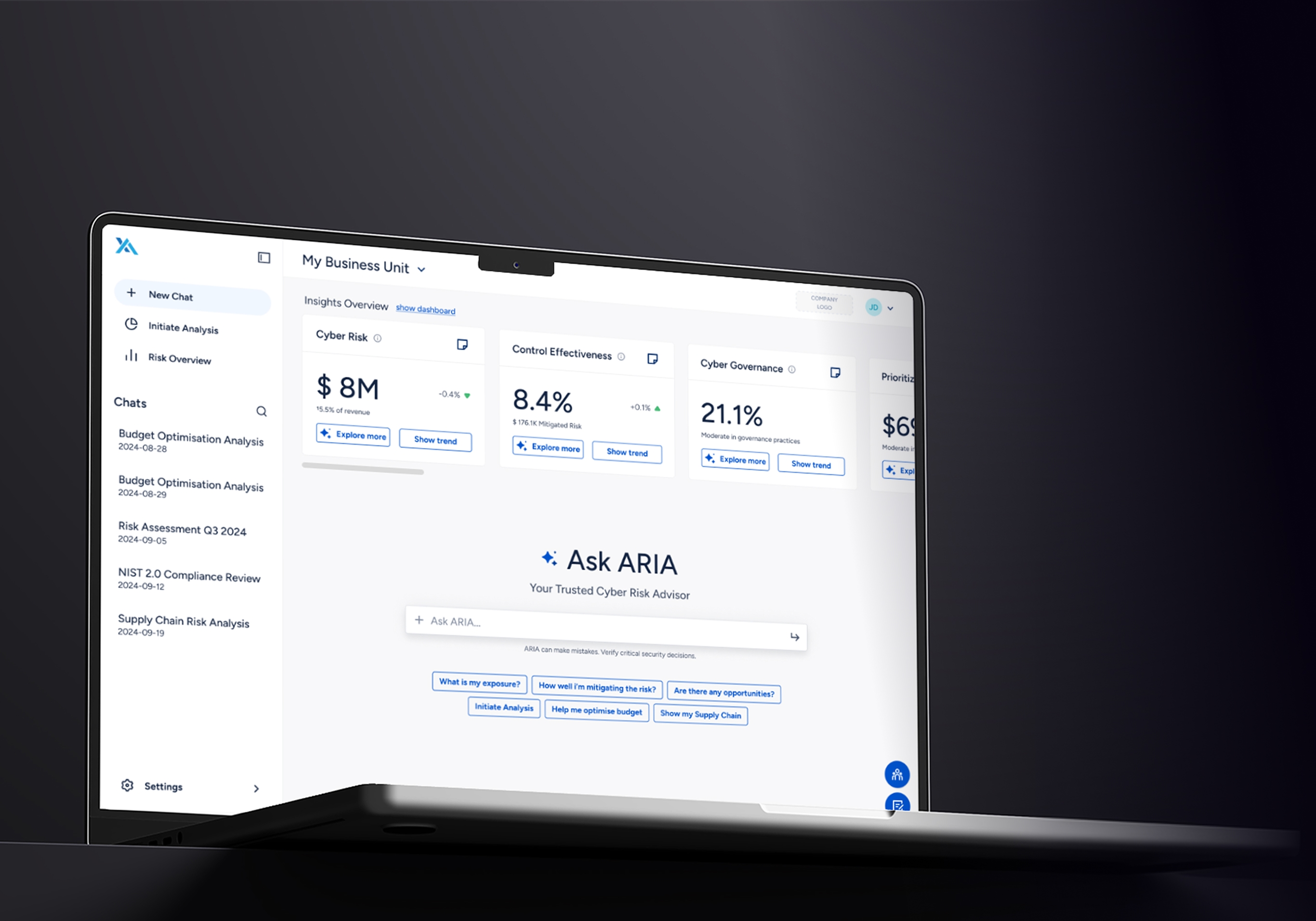
Embedded AI in a cybersecurity platform serving Fortune 500 clients: by embedding a conversational AI layer into the platform, we cut customer onboarding time by 95% and turned a quarterly reporting tool into a daily decision-support system.
Why us
Why enterprises choose us
We're a 50-person, cross-functional software development team based in Warsaw, Poland, building technology that delivers ROI, strong governance, and real adoption.
years delivering digital products
est. 2016
products shipped
web & mobile
experts on board
Product & UX designers, Software engineers, AI specialists, PMs
client NPS
Praised for communication, pace and quality
continents served
North America, South America, Europe, Asia, Africa
Frequently asked questions
Which process would you hand to agents first?
Tell us how reconciliation, reporting and alert queues run through your institution today. We'll tell you which process agents should take first, which autonomy level is safe, and what the pilot would look like.
Work with a team trusted by Siemens, PwC, and Toyota.

