Case StudiesBlogAbout Us
Get a proposal

Test what's possible before you commit to building it.

R&D Exploration gives your team a working proof of concept, a technology recommendation, and a realistic feasibility assessment. Before you commit to scope or development.

Talk to an Expert

Trusted by enterprises across Europe and the US:

Siemens
Siemens Healthineers
PwC
Geberit
Toyota
Rainbow
Chooose
Omnipack
Lexolve

Do any of these

sound familiar?
We have an idea but no proof it can be built.
Our team debates technology choices without data on either side.
We don't know if AI, automation, or custom dev is the right call.
We're about to start development on untested assumptions.
A competitor shipped something we thought was impossible.
What R&D Exploration Is

What R&D Exploration Is

R&D Exploration is the step before you commit to scope.

Our engineers compare available technologies, build proof-of-concept prototypes, and test technical hypotheses against real constraints: your data, your infrastructure, your performance requirements. You walk away knowing what's possible, what isn't, and what the trade-offs are.

It's for teams with a product idea, a business problem, or a strategic goal. And no certainty that the technology exists to make it real, or which technology is the right fit.

Let's talk

How R&D Exploration Works

01

Technical Discovery

We start with your business problem, your existing infrastructure, and what you're trying to achieve. Then we define specific technical hypotheses to test. Not vague "can AI do this?" but precise questions like "can we hit 95% extraction accuracy on your document types with an LLM-based pipeline?"

BUSINESS PROBLEM ANALYSISINFRASTRUCTURE AND CONSTRAINTS MAPPINGTECHNICAL HYPOTHESIS DEFINITION

02

Technology Scouting

Our engineers evaluate available technologies, frameworks, and architectural patterns against your constraints: performance, security, integration complexity, scalability, and cost.

TECHNOLOGY LANDSCAPE MAPPINGARCHITECTURE OPTIONS ANALYSISTECHNOLOGY COMPARISON MATRIX

03

Proof of Concept

We build focused prototypes that test the highest-risk assumptions against your real data and edge cases. If it works, you have evidence. If it doesn't, you saved months of development budget.

WORKING PROOF OF CONCEPTPERFORMANCE BENCHMARKS ON YOUR DATATECHNICAL RISK VALIDATION

04

Findings and Recommendation

A complete technical assessment: what works, what doesn't, what trade-offs exist, and our recommended path forward. Documented so your engineering team or your Scope Building partner can pick it up and run.

TECHNICAL FEASIBILITY REPORTRECOMMENDATION WITH ARCHITECTURE BLUEPRINTPROOF OF CONCEPT CODE AND DOCUMENTATION

01

Technical Discovery

We start with your business problem, your existing infrastructure, and what you're trying to achieve. Then we define specific technical hypotheses to test. Not vague "can AI do this?" but precise questions like "can we hit 95% extraction accuracy on your document types with an LLM-based pipeline?"

BUSINESS PROBLEM ANALYSISINFRASTRUCTURE AND CONSTRAINTS MAPPINGTECHNICAL HYPOTHESIS DEFINITION

02

Technology Scouting

Our engineers evaluate available technologies, frameworks, and architectural patterns against your constraints: performance, security, integration complexity, scalability, and cost.

TECHNOLOGY LANDSCAPE MAPPINGARCHITECTURE OPTIONS ANALYSISTECHNOLOGY COMPARISON MATRIX

03

Proof of Concept

We build focused prototypes that test the highest-risk assumptions against your real data and edge cases. If it works, you have evidence. If it doesn't, you saved months of development budget.

WORKING PROOF OF CONCEPTPERFORMANCE BENCHMARKS ON YOUR DATATECHNICAL RISK VALIDATION

04

Findings and Recommendation

A complete technical assessment: what works, what doesn't, what trade-offs exist, and our recommended path forward. Documented so your engineering team or your Scope Building partner can pick it up and run.

TECHNICAL FEASIBILITY REPORTRECOMMENDATION WITH ARCHITECTURE BLUEPRINTPROOF OF CONCEPT CODE AND DOCUMENTATION

Four Reasons to Explore Before You Invest

Cheaper Mistakes

You test technical assumptions before they become expensive ones. A proof of concept costs a fraction of a full development cycle. If an approach doesn't work, you find out in weeks. Not after six months of building on a flawed foundation.

Evidence Over Opinion

Engineering teams have strong opinions about technology stacks. R&D Exploration replaces internal debates with tested benchmarks. You pick the technology that performed best against your requirements, not the one your architect knows best.

Realistic Scoping

Scope Building works best when feasibility is already established. R&D Exploration removes the biggest unknown from scoping. So your feature list, timeline, and cost estimate are grounded in tested reality.

Faster Than Competitors

Teams that go straight from idea to development hit technical walls mid-project, then spend months course-correcting. Teams that validate technology first build on a solid foundation from day one.

See How We've Helped Others

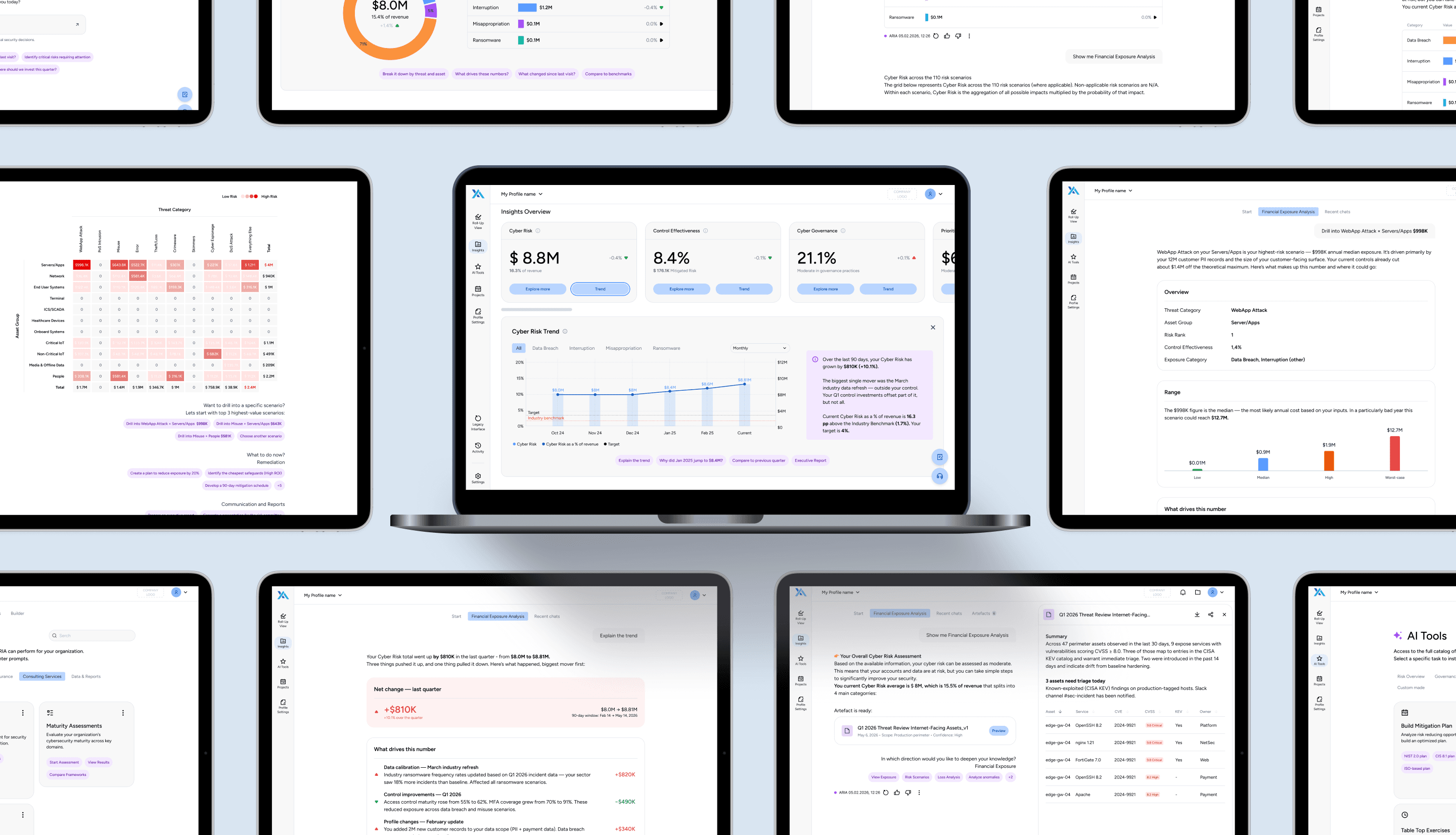
Cyber risk decision-making web dashboard—SSIC scalable platform for C-suite risk mitigation

Legacy Data into an AI-Powered Cybersecurity Management Platform

Securing Fortune 500 partnerships and tripling the corporate customer base through a millisecond-fast cybersecurity SaaS application.

View all projects

Frequently asked questions

What is R&D Exploration and how is it different from Scope Building?

Scope Building defines what you're building and how much it will cost. R&D Exploration comes before that. It answers whether your idea is technically feasible and which technology is the right choice. Scope Building assumes the technology works. R&D Exploration tests that assumption. A typical R&D Exploration runs 2 to 4 weeks; Scope Building usually follows once feasibility is confirmed.

When should an enterprise team run R&D Exploration?

When you have a product idea or business problem that depends on a technology you haven't tested yet. Common triggers: you want to use AI or ML but don't know if it will perform well enough on your data, you're considering a major architectural change, you need to integrate with legacy systems in a new way, or a competitor launched something and you need to understand the technology behind it.

What does R&D Exploration deliver?

A working proof of concept tested against your real data and constraints, a technology recommendation with documented rationale, an architecture blueprint, performance benchmarks, a risk assessment, and full documentation your engineering team can use as a starting point for scoping or development. Everything is delivered as a complete package at the end of the engagement.

How long does R&D Exploration take?

A typical engagement runs 2 to 4 weeks, depending on the complexity of the technical challenge. Explorations with multiple competing approaches or complex data requirements can take up to 6 weeks. You receive the full deliverable package at the end.

Do we need R&D Exploration if we already have a technical team?

Your internal team knows your product and infrastructure best. They're also busy maintaining and developing your current product. R&D Exploration by SH gives you a dedicated senior engineering team focused entirely on your technical question. With experience across industries and technology stacks your internal team may not have worked with.

Can you work with our existing infrastructure and data?

Yes. That's the point. A proof of concept tested in a vacuum is meaningless. We test against your real constraints: your data formats, your performance requirements, your security policies, your integration points. The results reflect what will actually work in your environment, not what works in a sandbox.

What happens after R&D Exploration?

If the proof of concept validates your hypothesis, the natural next step is Scope Building. Defining the full feature set, testing wireframes with users, and producing a development cost estimate. If the exploration reveals that the original approach won't work, we recommend alternative paths forward. Either outcome protects your development budget.

Have a Technical Hypothesis to Test?

We'll help you find out what's possible before you commit to building it.

Book a 30-min Call

Work with a team trusted by top-tier companies.

Rainbow logo
Siemens logo
Toyota logo

We build what comes next.

Company

Industries

Startup Development House sp. z o.o.

Aleje Jerozolimskie 81

Warsaw, 02-001

VAT-ID: PL5213739631

KRS: 0000624654

REGON: 364787848

Contact Us

hello@startup-house.com

Our office: +48 789 011 336

New business: +48 798 874 852

Follow Us

Award
logologologologo

Copyright © 2026 Startup Development House sp. z o.o.

EU ProjectsPrivacy policy