
AI Agents for Travel & Hospitality
We build multi-agent systems that handle disruption, refunds and guest requests across your GDS, PMS and payment systems. They act within your policy and fare rules, with a human in the loop.
Book a free consultationTrusted by enterprises across Europe and the US.



What is a multi-agent system in travel?
A multi-agent system in travel is a set of specialised AI agents for disruption handling, refunds and settlement, guest requests and policy that coordinate under an orchestrator and act directly in the systems of record: GDS, NDC, PMS, payment rails and accounting. Unlike a single chatbot, each agent owns one domain and escalates to a human at defined decision points.
The problems worth automating first
An example agent team: who does what
A multi-agent system works like a team with clear roles. Here's an example lineup for a travel operation:
Traveller / ops event
Orchestrator
Specialised agents
Disruption
Settlement
Guest
Policy & Compliance
Human approval gate
Systems of record
GDS/NDC · PMS · payment rails · accounting
Audit trail: every decision, input and rationale is logged
Disruption Agent
Monitors cancellations and delays, builds rebooking options within fare rules and your policy, and executes once approved, or automatically within thresholds you set.
Settlement Agent
Matches refunds and schedule changes across your booking engine, payment provider and accounting, and proposes reconciliation entries for approval.
Guest Agent
Resolves guest and passenger requests end-to-end in the property management system: booking changes, special requests, status updates. Escalates anything outside policy.
Policy & Compliance Agent
Validates every action the other agents propose against fare rules, corporate policy and passenger rights (EU 261) before it happens.
Orchestrator
Routes the work, keeps the order of operations, and writes the audit trail for every decision.
Not every deployment needs all five. Discovery tells you which two or three earn their keep first.
Orchestration, approval gates and audit trails work the same way in every system we ship.
See how multi-agent systems work
What this looks like in your operation
What the agents do
Disruption & rebooking
Detect event → build compliant rebooking options → rebook + notify the passenger
Refunds & settlement
Detect schedule change → identify affected bookings → propose refund path → reconcile after approval
Guest services
Classify request → act in PMS → confirm and log
Corporate travel
Validate request against policy → propose compliant option → book
Ancillary & upsell
Read booking context → make a fitting offer in-channel → fulfil
Systems touched
Disruption & rebooking
GDS, NDC, CRM, payment
Refunds & settlement
Booking engine, PSP, accounting
Guest services
PMS, CRM, loyalty
Corporate travel
GDS, OBT, ERP
Ancillary & upsell
CRS, PMS, payment
What we measure
Disruption & rebooking
Time-to-resolution per passenger; cost per disruption; NPS during disruption
Refunds & settlement
Backlog size; cost per refund; days to settlement
Guest services
Share of cases closed without a human; first-response time
Corporate travel
In-policy booking rate; savings per trip
Ancillary & upsell
Ancillary revenue per booking; upsell conversion
What the agents do
Systems touched
What we measure
Disruption & rebooking
Detect event → build compliant rebooking options → rebook + notify the passenger
GDS, NDC, CRM, payment
Time-to-resolution per passenger; cost per disruption; NPS during disruption
Refunds & settlement
Detect schedule change → identify affected bookings → propose refund path → reconcile after approval
Booking engine, PSP, accounting
Backlog size; cost per refund; days to settlement
Guest services
Classify request → act in PMS → confirm and log
PMS, CRM, loyalty
Share of cases closed without a human; first-response time
Corporate travel
Validate request against policy → propose compliant option → book
GDS, OBT, ERP
In-policy booking rate; savings per trip
Ancillary & upsell
Read booking context → make a fitting offer in-channel → fulfil
CRS, PMS, payment
Ancillary revenue per booking; upsell conversion
From first call to production
01
Architecture Discovery (2 weeks)
We map your process, systems and constraints. You get a reference architecture for your case, a recommended autonomy level per step, and a prioritised roadmap ranked by business value, whether you build with us or not.
02
Pilot in shadow mode (6-8 weeks)
The system runs in parallel with your current process, on live data, writing nothing. You compare outputs side by side and see exactly where it's right, where it's wrong, and what it costs to run, before it touches a system of record.
03
Production (8-12 weeks)
Integration with your systems through a controlled layer (MCP where possible), approval gates wired to your roles, audit trail switched on, security review passed.
04
AgentOps (ongoing)
Evaluation suites run on every change. We monitor accuracy, latency and cost per task, and re-evaluate the whole system when a model version changes, because a silent model update should never silently change your decisions.
01
Architecture Discovery (2 weeks)
We map your process, systems and constraints. You get a reference architecture for your case, a recommended autonomy level per step, and a prioritised roadmap ranked by business value, whether you build with us or not.
02
Pilot in shadow mode (6-8 weeks)
The system runs in parallel with your current process, on live data, writing nothing. You compare outputs side by side and see exactly where it's right, where it's wrong, and what it costs to run, before it touches a system of record.
03
Production (8-12 weeks)
Integration with your systems through a controlled layer (MCP where possible), approval gates wired to your roles, audit trail switched on, security review passed.
04
AgentOps (ongoing)
Evaluation suites run on every change. We monitor accuracy, latency and cost per task, and re-evaluate the whole system when a model version changes, because a silent model update should never silently change your decisions.
See how we've helped our clients
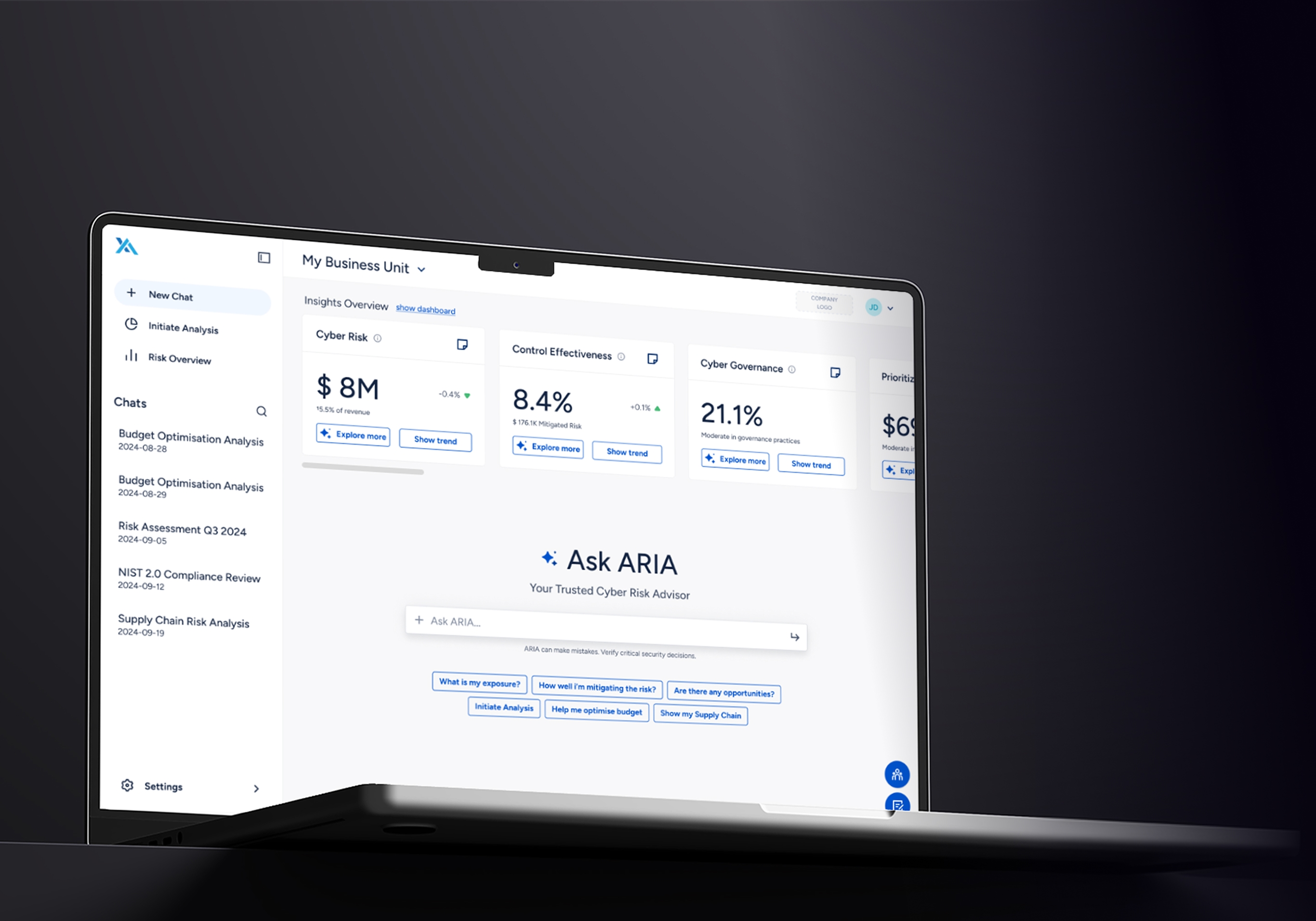
Embedded AI in a cybersecurity platform serving Fortune 500 clients: by embedding a conversational AI layer into the platform, we cut customer onboarding time by 95% and turned a quarterly reporting tool into a daily decision-support system.
Why us
Why enterprises choose us
We're a 50-person, cross-functional software development team based in Warsaw, Poland, building technology that delivers ROI, strong governance, and real adoption.
years delivering digital products
est. 2016
products shipped
web & mobile
experts on board
Product & UX designers, Software engineers, AI specialists, PMs
client NPS
Praised for communication, pace and quality
continents served
North America, South America, Europe, Asia, Africa
Frequently asked questions
Which disruption would you hand to agents first?
Tell us how disruptions, refunds or guest requests flow through your operation today. We'll tell you which process agents should take first, which autonomy level is safe, and what the pilot would look like.
Work with a team trusted by Siemens, PwC, and Toyota.

