
AI Agents for Manufacturing
We build multi-agent systems that read your MES, SCADA and ERP, and act on the plan. With approval gates where a wrong decision costs a changeover, and nothing anywhere near your safety systems.
Book a free consultationTrusted by enterprises across Europe and the US.



What is a multi-agent system in manufacturing?
A multi-agent system in manufacturing is a set of specialised AI agents for planning, maintenance, quality and procurement that read plant data from MES, SCADA and ERP, coordinate through an orchestrator, and either propose or execute changes to the production plan under defined human approval points.
The problems worth automating first
An example agent team: who does what
A multi-agent system works like a team with clear roles. Here's an example lineup for a manufacturing plant:
Plant event
Orchestrator
Specialised agents
Planning
Maintenance
Quality
Procurement
Knowledge
Human approval gate
Plant systems
MES/APS · CMMS · ERP · QMS
Audit trail: every decision, input and rationale is logged — with a hard boundary: no connection to safety-instrumented systems
Planning Agent
Recalculates the schedule when demand shifts, a line stops or a material is late, and proposes a replan with changeover cost attached, written to your planning system (APS) or MES only after approval.
Maintenance Agent
Triages sensor signals from SCADA, correlates them with failure history in your maintenance system (CMMS), and proposes a prioritised work order with the evidence attached.
Quality Agent
Investigates deviations across batches, shifts, suppliers and parameters, and returns root-cause hypotheses with the data trail an auditor expects.
Procurement Agent
Watches material coverage against supplier confirmations and flags the gap before it stops a line.
Knowledge Agent
Answers operators' questions from procedures, manuals and shift knowledge, with the source cited, so the answer survives an audit.
Orchestrator
Routes the work, keeps the order of operations, and writes the audit trail for every decision.
Not every deployment needs the full lineup. Discovery tells you which two or three earn their keep first.
Orchestration, approval gates and audit trails work the same way in every system we ship.
See how multi-agent systems work
What this looks like in your operation
What the agents do
Production rescheduling
Detect disruption → build schedule variants with changeover cost → write to APS/MES after approval
Predictive maintenance triage
Sensor signal → correlate with failure history → prioritised work order proposal
Quality root-cause
Deviation → search batches, shifts, deliveries, parameters → evidence-backed hypotheses
Material coverage
Forecast vs stock vs supplier confirmations → alert with proposed action
Shift knowledge & onboarding
Operator question → answer from procedures with source cited
Systems touched
Production rescheduling
MES, APS, ERP
Predictive maintenance triage
SCADA, CMMS
Quality root-cause
QMS, MES, LIMS
Material coverage
ERP, WMS, supplier portal
Shift knowledge & onboarding
DMS, procedures
What we measure
Production rescheduling
Schedule adherence; changeovers per week; planner hours per replan
Predictive maintenance triage
Unplanned downtime; MTBF; share of orders with confirmed cause
Quality root-cause
Scrap rate; time to root cause; repeat deviations
Material coverage
Line stockouts; inventory level; rush-order cost
Shift knowledge & onboarding
Onboarding time; questions escalated to HQ
What the agents do
Systems touched
What we measure
Production rescheduling
Detect disruption → build schedule variants with changeover cost → write to APS/MES after approval
MES, APS, ERP
Schedule adherence; changeovers per week; planner hours per replan
Predictive maintenance triage
Sensor signal → correlate with failure history → prioritised work order proposal
SCADA, CMMS
Unplanned downtime; MTBF; share of orders with confirmed cause
Quality root-cause
Deviation → search batches, shifts, deliveries, parameters → evidence-backed hypotheses
QMS, MES, LIMS
Scrap rate; time to root cause; repeat deviations
Material coverage
Forecast vs stock vs supplier confirmations → alert with proposed action
ERP, WMS, supplier portal
Line stockouts; inventory level; rush-order cost
Shift knowledge & onboarding
Operator question → answer from procedures with source cited
DMS, procedures
Onboarding time; questions escalated to HQ
From first call to production
01
Architecture Discovery (2 weeks)
We map your process, systems and constraints. You get a reference architecture for your case, a recommended autonomy level per step, and a prioritised roadmap ranked by business value, whether you build with us or not.
02
Pilot in shadow mode (6-8 weeks)
The system runs in parallel with your current process, on live data, writing nothing. Agents replan, triage and investigate alongside your team, and you compare their calls against what actually happened.
03
Production (8-12 weeks)
Integration with your systems through a controlled layer (MCP where possible), approval gates wired to your roles, audit trail switched on, security review passed.
04
AgentOps (ongoing)
Evaluation suites run on every change. We monitor accuracy, latency and cost per task, and re-evaluate the whole system when a model version changes, because a silent model update should never silently change your schedule.
01
Architecture Discovery (2 weeks)
We map your process, systems and constraints. You get a reference architecture for your case, a recommended autonomy level per step, and a prioritised roadmap ranked by business value, whether you build with us or not.
02
Pilot in shadow mode (6-8 weeks)
The system runs in parallel with your current process, on live data, writing nothing. Agents replan, triage and investigate alongside your team, and you compare their calls against what actually happened.
03
Production (8-12 weeks)
Integration with your systems through a controlled layer (MCP where possible), approval gates wired to your roles, audit trail switched on, security review passed.
04
AgentOps (ongoing)
Evaluation suites run on every change. We monitor accuracy, latency and cost per task, and re-evaluate the whole system when a model version changes, because a silent model update should never silently change your schedule.
See how we've helped our clients
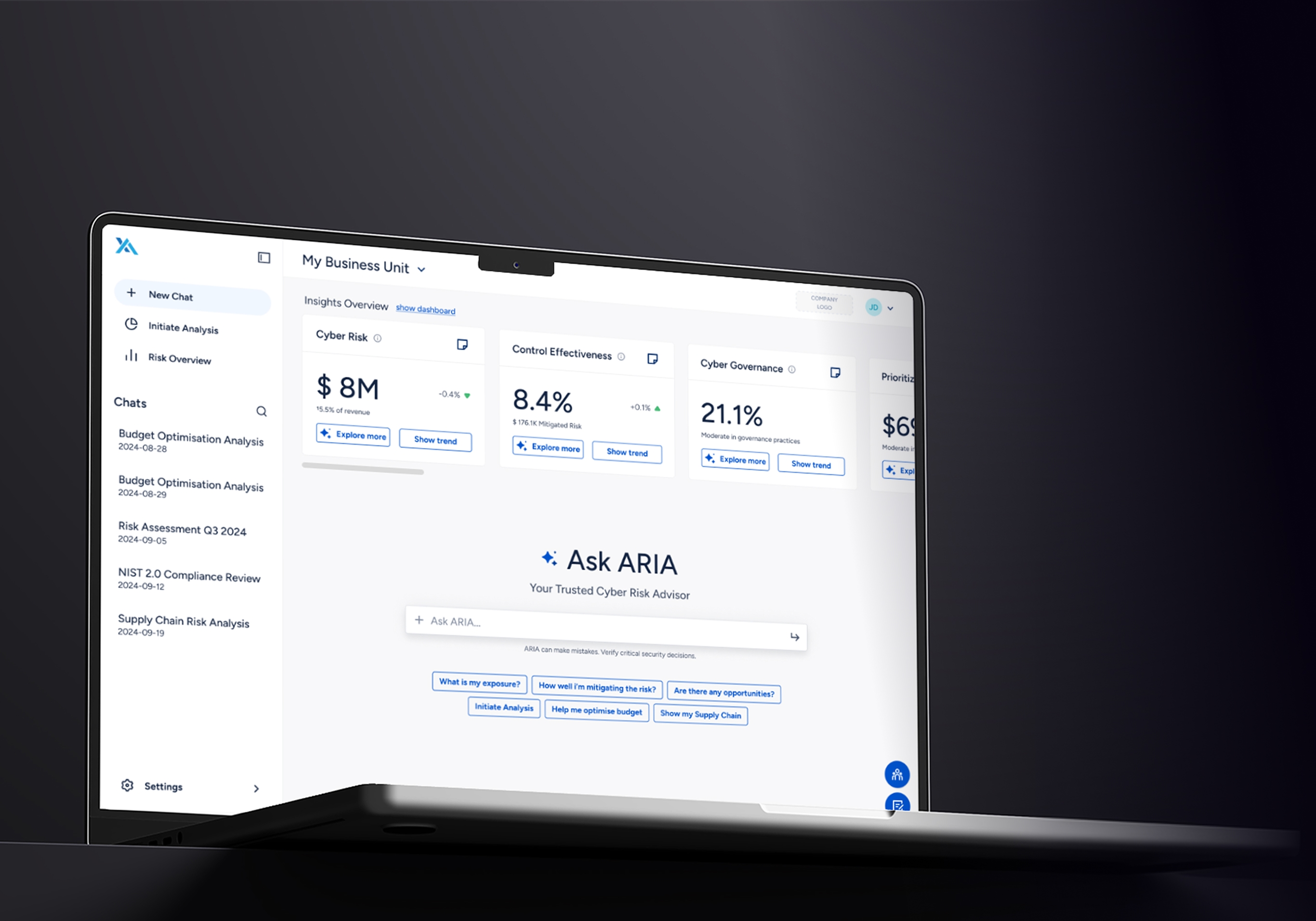
Embedded AI in a cybersecurity platform serving Fortune 500 clients: by embedding a conversational AI layer into the platform, we cut customer onboarding time by 95% and turned a quarterly reporting tool into a daily decision-support system.
Why us
Why enterprises choose us
We're a 50-person, cross-functional software development team based in Warsaw, Poland, building technology that delivers ROI, strong governance, and real adoption.
years delivering digital products
est. 2016
products shipped
web & mobile
experts on board
Product & UX designers, Software engineers, AI specialists, PMs
client NPS
Praised for communication, pace and quality
continents served
North America, South America, Europe, Asia, Africa
Frequently asked questions
Which line loses the most to manual replanning?
Tell us how replanning, maintenance and quality investigations run through your plant today. We'll tell you which process agents should take first, which autonomy level is safe, and what the pilot would look like.
Work with a team trusted by Siemens, PwC, and Toyota.

