
AI Agents for Retail & Agentic Commerce
We build multi-agent systems that run pricing, assortment, replenishment and returns inside your rules, and prepare your catalogue for the AI shopping agents your customers already use. Approval gates and daily-change limits are enforced in architecture.
Book a free consultationTrusted by enterprises across Europe and the US.



What is a multi-agent system in retail?
A multi-agent system in retail is a set of specialised AI agents for pricing, assortment, replenishment, content and customer operations that coordinate under an orchestrator and act in your commerce systems: PIM, OMS, ERP and POS. Agentic commerce is the second half: making your catalogue and checkout readable and transactable for AI shopping agents.
The problems worth automating first
An example agent team: who does what
A multi-agent system works like a team with clear roles. Here's an example lineup for a retail operation:
Market / order event
Orchestrator
Specialised agents
Pricing
Assortment
Replenishment
Content
Returns
Approval gates per rule set
Commerce systems
PIM · OMS · ERP · POS · marketplace APIs
Audit trail: every decision, input and rationale is logged
Pricing Agent
Watches competitors, elasticity and margin, and proposes price changes inside the rules you set: floor, ceiling, maximum daily movement.
Assortment Agent
Reads sales, seasonality and category gaps, and proposes assortment and planogram changes with the evidence attached.
Replenishment Agent
Recalculates coverage and order points per location and proposes replenishment before the shelf goes empty.
Content Agent
Enriches product data in your product information management system (PIM): attributes, descriptions, translations, marketplace compliance. A new SKU goes live in hours.
Returns Agent
Classifies each return, proposes the highest-value path, and flags abuse patterns.
Agentic Commerce Layer
Exposes catalogue, availability and checkout to your customers' AI shopping agents through emerging protocols (ACP, UCP), on your terms, with your guardrails.
Orchestrator
Routes the work, keeps the order of operations, and writes the audit trail for every decision.
Not every deployment needs the full lineup. Discovery tells you which two or three earn their keep first.
Orchestration, approval gates and audit trails work the same way in every system we ship.
See how multi-agent systems work
What this looks like in your operation
What the agents do
Dynamic pricing
Market signal → price proposal within margin rules → write after approval
Assortment & merchandising
Category and gap analysis → planogram and assortment proposals
Replenishment
Per-location forecast → order proposals → allocation
Product data / PIM
Detect attribute gaps → enrich → validate for marketplaces
Returns & reverse logistics
Classify return → route to best-value path → dispatch
Agentic commerce readiness
Expose catalogue, stock and checkout to shopping agents
Systems touched
Dynamic pricing
Pricing engine, ERP, POS
Assortment & merchandising
ERP, POS, planogram
Replenishment
ERP, WMS, OMS
Product data / PIM
PIM, DAM, marketplace APIs
Returns & reverse logistics
OMS, WMS, ERP
Agentic commerce readiness
PIM, OMS, payment
What we measure
Dynamic pricing
Gross margin; markdown share; price-competitiveness index
Assortment & merchandising
Sales per m²; rotation; dead-stock share
Replenishment
In-stock rate; inventory level; emergency freight cost
Product data / PIM
Time-to-live per SKU; attribute completeness; feed rejections
Returns & reverse logistics
Cost per return; value recovery rate
Agentic commerce readiness
Share of traffic and revenue from the agent channel
What the agents do
Systems touched
What we measure
Dynamic pricing
Market signal → price proposal within margin rules → write after approval
Pricing engine, ERP, POS
Gross margin; markdown share; price-competitiveness index
Assortment & merchandising
Category and gap analysis → planogram and assortment proposals
ERP, POS, planogram
Sales per m²; rotation; dead-stock share
Replenishment
Per-location forecast → order proposals → allocation
ERP, WMS, OMS
In-stock rate; inventory level; emergency freight cost
Product data / PIM
Detect attribute gaps → enrich → validate for marketplaces
PIM, DAM, marketplace APIs
Time-to-live per SKU; attribute completeness; feed rejections
Returns & reverse logistics
Classify return → route to best-value path → dispatch
OMS, WMS, ERP
Cost per return; value recovery rate
Agentic commerce readiness
Expose catalogue, stock and checkout to shopping agents
PIM, OMS, payment
Share of traffic and revenue from the agent channel
From first call to production
01
Architecture Discovery (2 weeks)
We map your process, systems and constraints. You get a reference architecture for your case, a recommended autonomy level per step, and a prioritised roadmap ranked by business value, whether you build with us or not.
02
Pilot in shadow mode (6-8 weeks)
The system runs in parallel with your current process, on live data, writing nothing. Agents price, replenish and enrich one category alongside your team, and you compare margin, availability and time-to-live against the rest of the estate.
03
Production (8-12 weeks)
Integration with your systems through a controlled layer (MCP where possible), approval gates wired to your rule sets, audit trail switched on, security review passed.
04
AgentOps (ongoing)
Evaluation suites run on every change. We monitor accuracy, latency and cost per task, and re-evaluate the whole system when a model version changes, because a silent model update should never silently change your prices.
01
Architecture Discovery (2 weeks)
We map your process, systems and constraints. You get a reference architecture for your case, a recommended autonomy level per step, and a prioritised roadmap ranked by business value, whether you build with us or not.
02
Pilot in shadow mode (6-8 weeks)
The system runs in parallel with your current process, on live data, writing nothing. Agents price, replenish and enrich one category alongside your team, and you compare margin, availability and time-to-live against the rest of the estate.
03
Production (8-12 weeks)
Integration with your systems through a controlled layer (MCP where possible), approval gates wired to your rule sets, audit trail switched on, security review passed.
04
AgentOps (ongoing)
Evaluation suites run on every change. We monitor accuracy, latency and cost per task, and re-evaluate the whole system when a model version changes, because a silent model update should never silently change your prices.
See how we've helped our clients
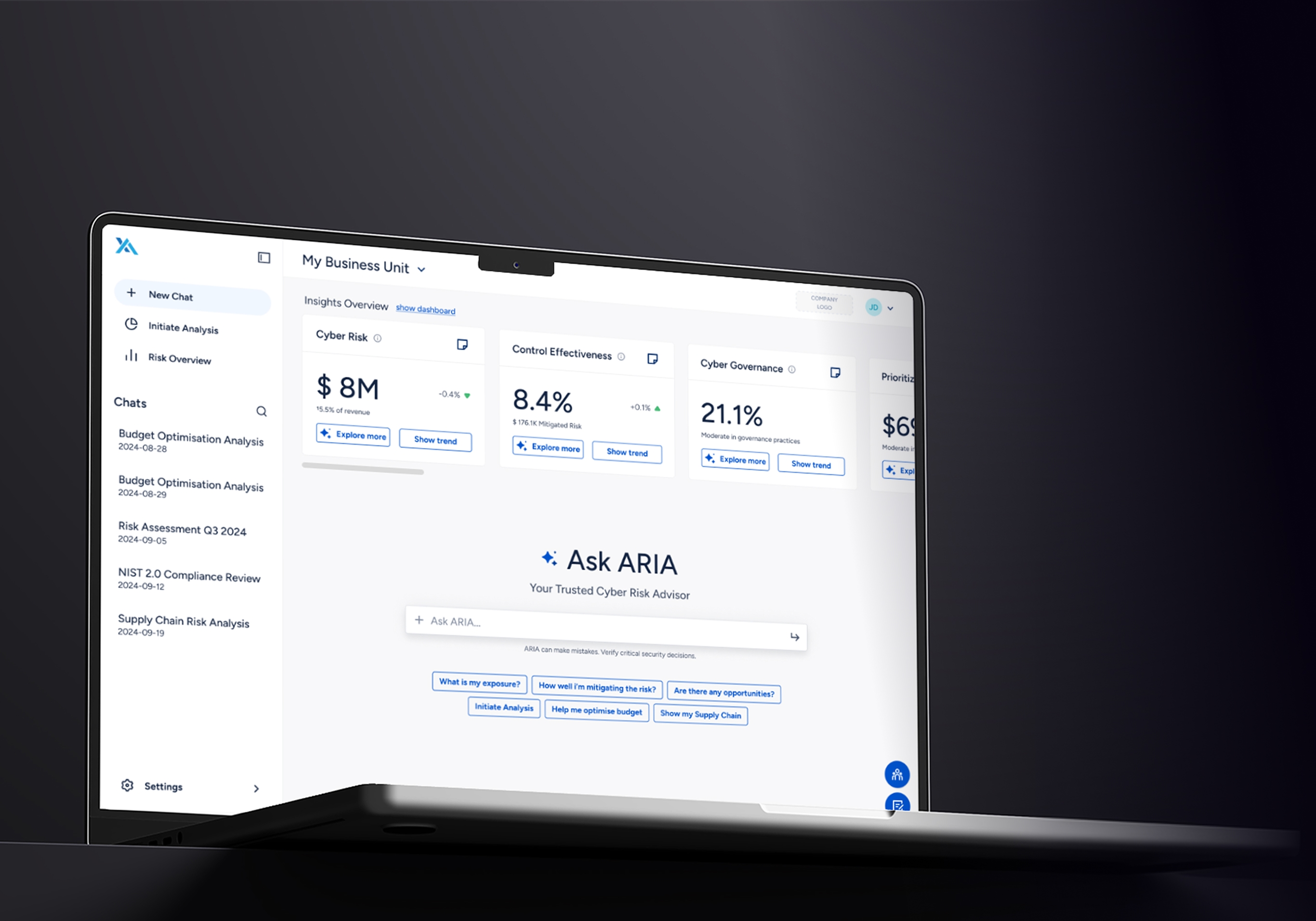
Embedded AI in a cybersecurity platform serving Fortune 500 clients: by embedding a conversational AI layer into the platform, we cut customer onboarding time by 95% and turned a quarterly reporting tool into a daily decision-support system.
Why us
Why enterprises choose us
We're a 50-person, cross-functional software development team based in Warsaw, Poland, building technology that delivers ROI, strong governance, and real adoption.
years delivering digital products
est. 2016
products shipped
web & mobile
experts on board
Product & UX designers, Software engineers, AI specialists, PMs
client NPS
Praised for communication, pace and quality
continents served
North America, South America, Europe, Asia, Africa
Frequently asked questions
Which category would you let agents run first?
Tell us how pricing, product data and returns run through your operation today. We'll tell you which process agents should take first, which autonomy level is safe, and what the pilot would look like.
Work with a team trusted by Siemens, PwC, and Toyota.

