
AI Agents for Industrial Operations
We build multi-agent systems that coordinate warehouses, fleets, field crews and energy assets: reading your WMS, TMS and IIoT platforms, and acting within thresholds your operators set. And never, under any configuration, touching a safety system.
Book a free consultationTrusted by enterprises across Europe and the US.



What is a multi-agent system in industrial operations?
A multi-agent system in industrial operations coordinates specialised AI agents across a distributed network of warehouses, fleets, field crews and energy assets: reading from WMS, TMS, EAM and IIoT platforms and acting within thresholds set by the operator, with escalation paths for anything outside them.
The problems worth automating first
An example agent team: who does what
A multi-agent system works like a team with clear roles. Here's an example lineup for an industrial network:
Network event
Orchestrator
Specialised agents
Warehouse ops
Fleet & routes
Field service
Energy
EHS
Spare parts
Thresholds & escalation
Operations systems
WMS · TMS · EAM/CMMS · IIoT · EHS
Audit trail: every decision, input and rationale is logged — with a hard boundary: no connection to safety-instrumented systems
Warehouse Ops Agent
Balances task queues, resource allocation and dispatch priorities in real time, inside your warehouse management system (WMS).
Fleet & Route Agent
Recalculates routes when conditions change and proposes reallocation in your transport management system (TMS), with the cost delta shown.
Field Service Agent
Matches work orders to technicians by skill, parts availability and location. First-time-fix is the metric.
Energy Agent
Optimises consumption profiles and asset schedules against tariffs and grid constraints.
EHS Agent
Tracks incidents, inspection deadlines and permits across environmental, health and safety obligations, and assembles the compliance file before the audit asks for it.
Spare Parts Agent
Balances parts stock against failure risk and lead times: availability without the frozen capital.
Orchestrator
Routes the work, keeps the order of operations, and writes the audit trail for every decision, per site.
Not every deployment needs the full lineup. Discovery tells you which two or three earn their keep first.
Orchestration, approval gates and audit trails work the same way in every system we ship.
See how multi-agent systems work
What this looks like in your operation
What the agents do
Warehouse operations
Real-time task prioritisation and reallocation
Fleet & routing
Condition change → new route → reallocation and notification
Field service
Work order → technician, parts and window match → schedule
Energy & assets
Load and tariff forecast → asset schedule proposals
EHS & compliance
Deadline and incident tracking → file assembly → alerts
Spare parts
Failure risk vs lead time → stock level proposals
Systems touched
Warehouse operations
WMS, ERP, OMS
Fleet & routing
TMS, GIS, telematics
Field service
FSM, EAM, WMS
Energy & assets
SCADA (read-only), IIoT, tariff systems
EHS & compliance
EHS, EAM, DMS
Spare parts
EAM, ERP, WMS
What we measure
Warehouse operations
Lines per hour; on-SLA dispatch share; cost per order
Fleet & routing
On-time delivery; cost per km; fleet utilisation
Field service
First-time-fix rate; response time; km driven
Energy & assets
Energy cost per unit; peak shaving
EHS & compliance
Missed deadlines; audit-prep time
Spare parts
Parts availability; frozen capital value
What the agents do
Systems touched
What we measure
Warehouse operations
Real-time task prioritisation and reallocation
WMS, ERP, OMS
Lines per hour; on-SLA dispatch share; cost per order
Fleet & routing
Condition change → new route → reallocation and notification
TMS, GIS, telematics
On-time delivery; cost per km; fleet utilisation
Field service
Work order → technician, parts and window match → schedule
FSM, EAM, WMS
First-time-fix rate; response time; km driven
Energy & assets
Load and tariff forecast → asset schedule proposals
SCADA (read-only), IIoT, tariff systems
Energy cost per unit; peak shaving
EHS & compliance
Deadline and incident tracking → file assembly → alerts
EHS, EAM, DMS
Missed deadlines; audit-prep time
Spare parts
Failure risk vs lead time → stock level proposals
EAM, ERP, WMS
Parts availability; frozen capital value
From first call to production
01
Architecture Discovery (2 weeks)
We map your process, systems and constraints. You get a reference architecture for your case, a recommended autonomy level per step, and a prioritised roadmap ranked by business value, whether you build with us or not.
02
Pilot in shadow mode (6-8 weeks)
The system runs in parallel with your current process, on live data, writing nothing. Agents propose reallocations and schedules alongside your dispatchers, and the report shows exactly which calls they'd have made differently, and what those calls were worth.
03
Production (8-12 weeks)
Integration with your systems through a controlled layer (MCP where possible), thresholds and escalation paths wired to your roles, audit trail switched on, security review passed.
04
AgentOps (ongoing)
Evaluation suites run on every change. We monitor accuracy, latency and cost per task, and re-evaluate the whole system when a model version changes, because a silent model update should never silently change your routes.
01
Architecture Discovery (2 weeks)
We map your process, systems and constraints. You get a reference architecture for your case, a recommended autonomy level per step, and a prioritised roadmap ranked by business value, whether you build with us or not.
02
Pilot in shadow mode (6-8 weeks)
The system runs in parallel with your current process, on live data, writing nothing. Agents propose reallocations and schedules alongside your dispatchers, and the report shows exactly which calls they'd have made differently, and what those calls were worth.
03
Production (8-12 weeks)
Integration with your systems through a controlled layer (MCP where possible), thresholds and escalation paths wired to your roles, audit trail switched on, security review passed.
04
AgentOps (ongoing)
Evaluation suites run on every change. We monitor accuracy, latency and cost per task, and re-evaluate the whole system when a model version changes, because a silent model update should never silently change your routes.
See how we've helped our clients
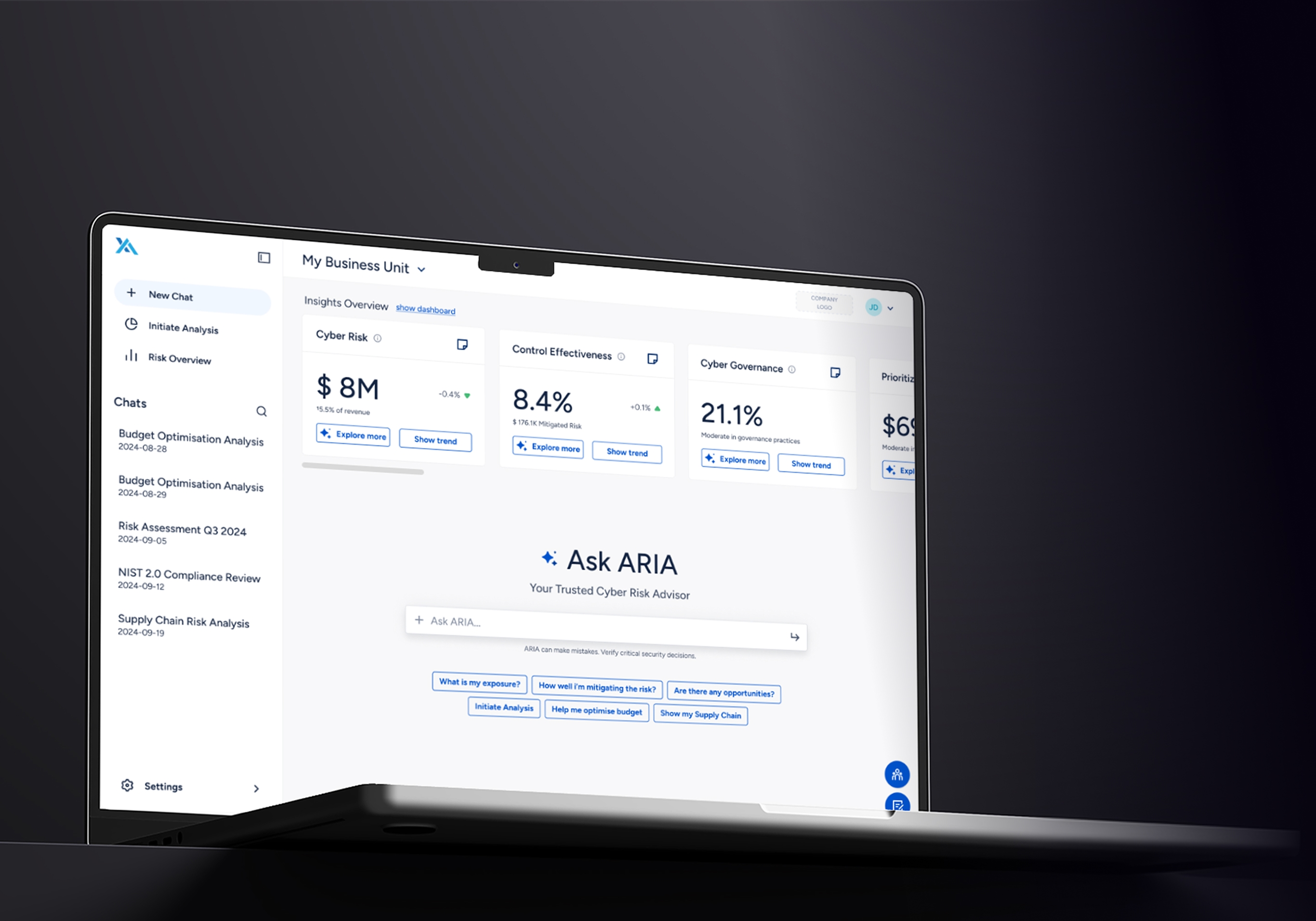
Embedded AI in a cybersecurity platform serving Fortune 500 clients: by embedding a conversational AI layer into the platform, we cut customer onboarding time by 95% and turned a quarterly reporting tool into a daily decision-support system.
Why us
Why enterprises choose us
We're a 50-person, cross-functional software development team based in Warsaw, Poland, building technology that delivers ROI, strong governance, and real adoption.
years delivering digital products
est. 2016
products shipped
web & mobile
experts on board
Product & UX designers, Software engineers, AI specialists, PMs
client NPS
Praised for communication, pace and quality
continents served
North America, South America, Europe, Asia, Africa
Frequently asked questions
Where does your network leak the most: routes, energy, or the warehouse floor?
Tell us how routing, energy and warehouse operations run through your network today. We'll tell you which process agents should take first, which autonomy level is safe, and what the pilot would look like.
Work with a team trusted by Siemens, PwC, and Toyota.

