Software Solution Development

In the high-stakes arena of modern business, software solution development is no longer just a technical necessity; it is the fundamental engine of growth and competitive advantage. Whether you are an early-stage founder looking to prove a concept or an executive at a scaling enterprise, the way you architect, build, and deploy digital products determines your market longevity. At Startup House, we view this process as a strategic partnership where technical precision meets entrepreneurial vision.
Building a successful product requires more than just clean code. It demands a deep understanding of product-market fit, a commitment to agile transformation, and the foresight to build for scalability from day one. This guide serves as your roadmap through the complexities of creating high-impact software that doesn't just function but thrives in today's demanding digital ecosystem.
Key Takeaways
- Strategic Alignment: Every line of code must serve a clear business objective and solve a specific user pain point.
- Agile Methodology: Iterative development ensures flexibility, allowing you to pivot based on real-time market feedback.
- Scalable Architecture: Investing in a robust foundation early prevents technical debt from crippling your growth later.
- User-Centric Design: Aesthetics are secondary to functionality; great software is defined by how intuitively it solves problems.
- Security-First Mindset: Data integrity and regulatory compliance are non-negotiable pillars of modern engineering.
- Continuous Evolution: Deployment is just the beginning; long-term success requires proactive maintenance and feature iteration.
What is Software Solution Development?
Software solution development is the comprehensive process of designing, building, deploying, and maintaining custom software tailored to address specific business challenges or user needs. Unlike off-the-shelf software, these custom solutions are engineered to integrate seamlessly with existing workflows, providing unique functionality that generic platforms cannot match.
The core components of a modern software solution typically include:
| Component | Description | Business Value |
|---|---|---|
| Full-Stack Engineering | Front-end interfaces and back-end logic. | Seamless user experience and robust data handling. |
| Cloud Infrastructure | Hosting on AWS, Azure, or Google Cloud. | Scalability, reliability, and global accessibility. |
| API Integration | Connecting disparate systems and third-party tools. | Streamlined operations and data synchronization. |
| Data Analytics | Built-in tracking and reporting engines. | Informed decision-making based on user behavior. |
The Blueprint: Navigating the Development Lifecycle
Successful software solution development follows a rigorous but adaptable lifecycle. At Startup House, we move beyond the traditional "waterfall" approach, embracing an agile mindset that prioritizes speed-to-market without sacrificing architectural integrity. This ensures that your investment yields a product that is both relevant and reliable.
1. Product Discovery and Ideation
Before the first line of code is written, we must define the "why." This phase is about stripping away assumptions and validating the core business logic. We conduct deep-dive workshops to bridge the gap between your vision and technical requirements, ensuring we are building the right thing for the right people.
During discovery, we focus on product-market fit. We analyze the competitive landscape, define user personas, and map out the user journey. The result is a clear technical roadmap that prioritizes features for a Minimum Viable Product (MVP), allowing you to test the waters before committing to a full-scale build.
2. Architecture and Design Services
Architecture is the skeleton of your software. If it’s weak, the product will eventually collapse under its own weight. We focus on creating modular structures that allow for easy updates and horizontal scaling. This is where platform engineering comes into play, ensuring the underlying infrastructure is automated, secure, and performant.
Simultaneously, our design services team focuses on User Experience (UX) and User Interface (UI). We believe that design is how it works, not just how it looks. We create wireframes and high-fidelity prototypes that go through rigorous testing to ensure friction-less navigation and high user retention rates.
3. Agile Engineering and Development
This is where the vision becomes a reality. Our engineers utilize modern tech stacks like React, Node.js, and Python to build high-performance applications. We break the project into sprints—two-week cycles of intensive development followed by reviews and adjustments. This keeps you in the loop and ensures the project never drifts from its intended course. Key technical focuses during this stage include:
- Clean Code Standards: Writing maintainable code that any developer can understand and build upon.
- Continuous Integration/Continuous Deployment (CI/CD): Automating the testing and deployment pipeline for faster releases.
- Security Protocols: Implementing encryption, secure authentication (OAuth), and regular vulnerability scans from day one.
Choosing the Right Cooperation Model
Every business has different needs when it comes to technical partnership. Whether you need an autonomous team to take over a project or extra hands to augment your internal staff, the cooperation models you choose will dictate the pace and cost-efficiency of development.
Dedicated Development Teams
For long-term, complex projects, a dedicated team acts as an extension of your company. You get full-time commitment from developers, designers, and QA engineers who live and breathe your product. This model provides the highest level of continuity and deep domain expertise.
Staff Augmentation
If you already have a core team but lack specific skills—such as cybersecurity experts or data scientists—staff augmentation allows you to plug those gaps instantly. It’s a flexible way to scale your capacity without the overhead of long-term hiring.
Project-Based Delivery
This is ideal for well-defined projects with a clear scope and timeline, such as building an MVP. We take full ownership of the delivery, managing everything from initial discovery to the final launch, allowing you to focus on the business side of the house.
Industry-Specific Software Solutions
Generic solutions rarely solve specific industry pain points. The regulatory landscape of healthcare is vastly different from the high-frequency transaction requirements of finance. True software solution development requires a partner who understands these nuances.
FinTech and Financial Systems
In the world of FinTech, security and compliance are the top priorities. We build solutions that handle sensitive data with military-grade encryption while ensuring seamless integration with banking APIs and payment gateways. Speed and precision are non-negotiable here.
EdTech and Digital Learning
The shift to remote and hybrid learning has transformed EdTech. Modern solutions must prioritize engagement through gamification, handle massive concurrent user loads, and provide robust analytics for educators to track student progress in real-time.
Travel and Hospitality Tech
The Travel Tech sector demands high-performance booking engines, real-time inventory management, and personalized user experiences. We build platforms that aggregate data from multiple sources to provide users with a frictionless travel planning experience.
HealthTech and Compliance
Building for healthcare requires a deep commitment to HIPAA and GDPR compliance. We focus on interoperability, allowing different medical systems to communicate securely, while providing doctors and patients with intuitive interfaces for telemedicine and health tracking.
The Power of AI and Data Science
Artificial Intelligence is no longer a futuristic concept; it is an essential component of modern software solution development. By integrating AI tech, we help businesses automate repetitive tasks, predict user behavior, and provide hyper-personalized experiences.
Our approach to AI & Data Science focuses on tangible outcomes:
- Predictive Analytics: Using historical data to forecast trends and make proactive business moves.
- Natural Language Processing (NLP): Building intelligent chatbots and sentiment analysis tools that understand human nuance.
- Machine Learning Models: Creating systems that improve over time as they process more data, increasing efficiency and accuracy.
Technical Excellence: The Startup House Standards
We don't just "build apps." We engineer assets. Our commitment to technical excellence is what sets our software solution development apart. We believe in transparency, which means you always know exactly what is happening in your codebase.
Security by Design
We treat security as a primary feature, not an afterthought. In an era of increasing data breaches, our cybersecurity protocols ensure that your application and user data are protected through every layer of the stack. This includes regular audits, penetration testing, and adherence to global standards like ISO 27001.
Performance and Optimization
A slow application is a failed application. We optimize every line of code for performance, ensuring low latency and high responsiveness even under heavy loads. This involves strategic caching, database optimization, and utilizing content delivery networks (CDNs) to serve users globally.
Scalable Infrastructure
We build with the future in mind. Using microservices architecture and containerization (like Docker and Kubernetes), we ensure that your software can handle ten users or ten million users without a hitch. This horizontal scalability is vital for startups aiming for rapid growth.
The Business of Software: ROI and Risk Mitigation
Investing in custom software is a significant capital allocation. As your expert co-founder, we focus on maximizing your Return on Investment (ROI) while minimizing the risks associated with technical innovation.
De-risking the Process
Software development projects often fail due to scope creep or poor communication. We mitigate these risks through:
- Transparent Reporting: Regular updates and access to project management tools like Jira or Linear.
- Fixed-Scope MVPs: Starting with a focused set of features to test the market quickly and affordably.
- Quality Assurance: Constant manual and automated testing to catch bugs before they reach the end-user.
The Real Cost of Software
Many founders focus solely on the initial build cost, but the Total Cost of Ownership (TCO) includes maintenance, hosting, and future iterations. We provide clear, honest estimates and help you budget for the full lifecycle of your product, ensuring you are never blindsided by "hidden" technical costs.
Future-Proofing Your Digital Strategy
The tech landscape shifts rapidly. A solution built today must be flexible enough to integrate with the technologies of tomorrow. This is why we emphasize clean architecture and modular design. By decoupling different parts of your system, we make it possible to update your front-end or switch your database without rewriting the entire application.
Staying ahead involves:
- API-First Development: Allowing your software to easily connect with new tools and platforms as they emerge.
- Cloud-Native Approaches: Leveraging the full power of cloud services for elasticity and cost-savings.
- User Feedback Loops: Building mechanisms that allow you to gather and act on user suggestions instantly.
Frequently Asked Questions
What is the difference between a software solution and a standard application?
A standard application is often built to perform a specific task in isolation. A software solution is more holistic; it is designed to address a complex business problem, often integrating multiple systems, data sources, and workflows into a unified ecosystem that drives specific business results.
How long does the development process typically take?
A Minimum Viable Product (MVP) typically takes between 3 to 6 months to develop. A full-scale enterprise solution can take 9 months to a year or more, depending on complexity. We focus on delivering value early through iterative releases, so you don't have to wait until the end of the project to see progress.
Should I build a web app or a mobile app first?
This depends entirely on your user base. If your users need "on-the-go" access with offline capabilities, a mobile app is the way to go. If your tool is intended for complex data entry or productivity in an office setting, a web app is usually the better starting point. Often, a Progressive Web App (PWA) offers a great middle ground.
How do you ensure the security of my intellectual property?
We take IP protection very seriously. All our contracts include strict non-disclosure agreements (NDAs) and intellectual property transfer clauses. Upon completion, you own 100% of the source code and the rights to the product we've built together.
What happens after the software is launched?
Launch is only the beginning. We provide ongoing support, maintenance, and optimization services via our software development services. This includes monitoring for bugs, updating libraries to maintain security, and developing new features based on user feedback.
How do you handle technical debt?
We minimize technical debt by adhering to high engineering standards and performing regular code reviews. If we are taking over a legacy system, we conduct a thorough audit and create a "refactoring" roadmap to clean up the code in stages, ensuring the system remains stable while we modernize it.
Can you work with my existing in-house team?
Absolutely. We often function in a "co-delivery" mode where our developers work side-by-side with yours. This allows for rapid knowledge transfer and ensures your internal team is fully equipped to maintain the product long-term.
Conclusion: Your Path to Innovation
In the world of software solution development, there are no shortcuts to quality. But with the right partner, the journey from a raw idea to a market-leading product can be streamlined, predictable, and highly rewarding.
At Startup House, we bring the energy of a startup and the expertise of a seasoned engineering firm to every project. We are here to help you navigate the technical hurdles, outpace your competition, and build digital products that truly matter. Whether you're ready to start your MVP or need to modernize a complex legacy system, we have the tools, the talent, and the passion to make it happen. Let's build something extraordinary together.
How this article was made. Drafted with AI assistance, then fact-checked and edited by our team. Editorial responsibility: Startup Development House sp. z o.o. Read our AI content policy
Digital Transformation Strategy for Siemens Finance
Cloud-based platform for Siemens Financial Services in Poland


You may also like...
Platform Engineering vs DevOps
DevOps and platform engineering solve the same problem at different scales. Here's how they differ, when you need a platform, and how to build one.
Alexander Stasiak
Jun 27, 2026・14 min read
DevOps Best Practices
A practical rundown of the DevOps practices that actually move the needle in 2026 — automated CI/CD, infrastructure as code, embedded security, and observability — plus how to assess where your team stands.
Alexander Stasiak
Jun 30, 2026・11 min read

Custom Ios Application Development Services
The Apple ecosystem rewards products that feel native and punishes those that do not. This guide covers custom iOS development as an engineering discipline: Swift and SwiftUI tooling, modular architecture patterns like MVVM and VIPER, and the performance work that keeps apps responsive under load. It follows a build from idea to App Store, examines industry-specific iOS requirements, and compares partnership models. The final sections address the challenges that most commonly delay iOS releases.
Alexander Stasiak
Aug 04, 2026・9 min read

Custom Software Development
Off-the-shelf platforms force your business to bend around their limitations. Custom software development reverses that relationship, shaping the system around your actual processes, data and competitive advantage. This guide walks the full lifecycle, from discovery and architecture through deployment, scaling and maintenance, and shows where bespoke builds outperform generic alternatives. You will also find the cooperation models, security considerations and cost realities that determine whether a custom project pays back.
Alexander Stasiak
Aug 12, 2026・9 min read

Engineering and Customer Success Communication: Turning Product Insight into Action
In most SaaS companies, the gap between what engineering ships and what customers actually experience isn't a technical problem — it's a communication problem. Bugs bounce between teams for weeks. CS promises fixes that aren't on any sprint. Customers churn over issues that were never properly escalated. This playbook gives engineering and customer success leaders a practical framework for shared escalation paths, joint metrics, and the recurring cadences that turn ad hoc collaboration into a repeatable system.
Alexander Stasiak
Mar 19, 2026・14 min read
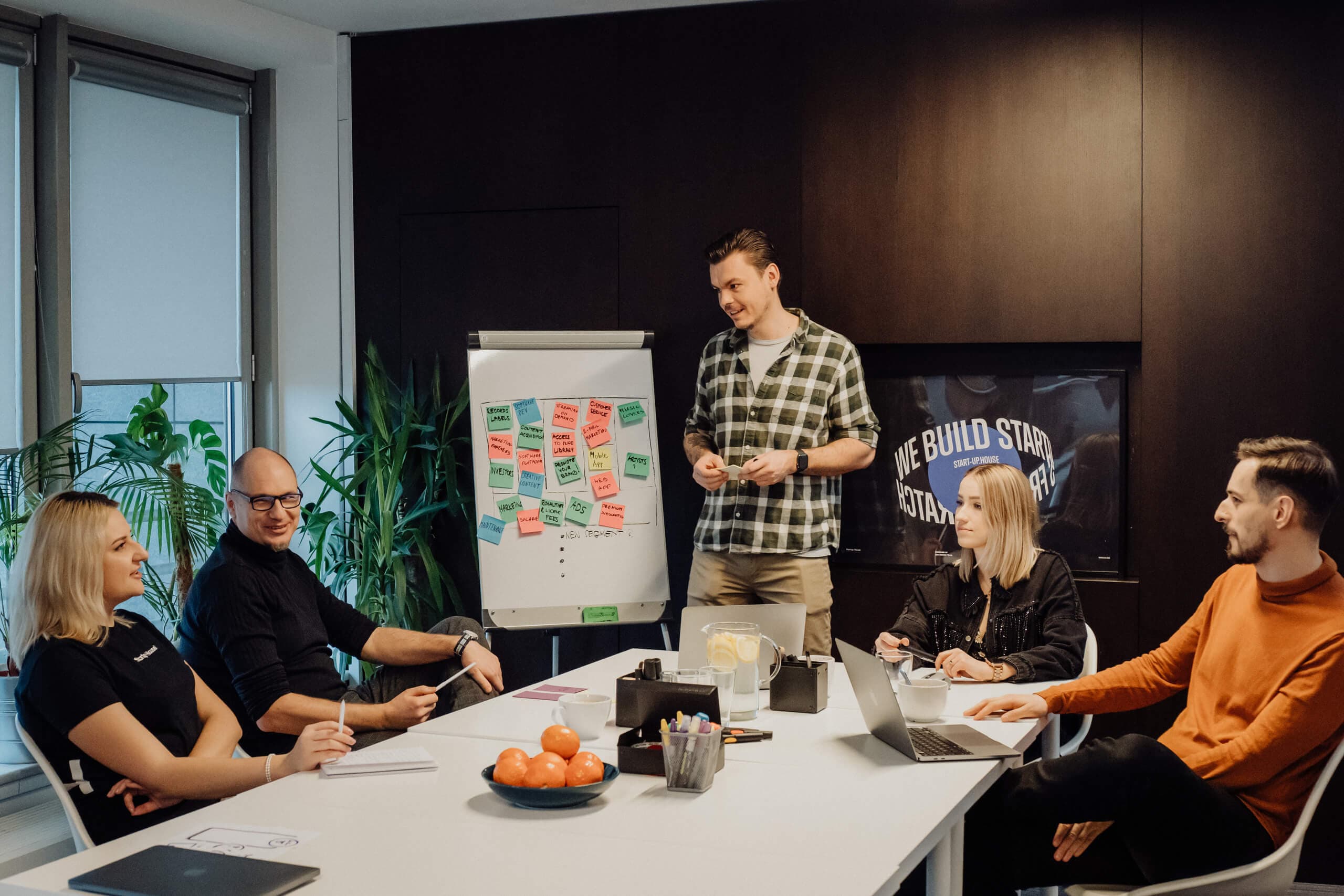
The Innovation Product Life Cycle: Phases and Strategic Insights
Mastering the innovation product life cycle—from ideation to renewal—gives businesses a competitive edge in a fast-evolving market. This guide unpacks each phase and offers strategic insights to help you plan, adapt, and thrive.
Alexander Stasiak
Jun 24, 2025・10 min read
Recently added

How Startup House Cut Leasing Applications to 2 Minutes for Siemens Financial Services
Leasing used to mean paperwork, manual credit checks, and decisions that waited for office hours. For Siemens Financial Services Poland, Startup House replaced that with SimplyLease Online: an application customers complete in about 2 minutes and an automated credit decision delivered in about 7, at any hour. This case study shows how the platform was built within Siemens Group security standards, how it connects to Siemens systems and external data providers, and what a partnership running since 2016 has delivered. It closes with three lessons that apply to almost any financing or lending product.
Alexander Stasiak
Oct 06, 2026・5 min read

How a Cybersecurity Platform Serving Fortune 500 Clients Cut Onboarding by 95% with an AI Agent Built by Startup House
A cyber risk platform trusted by Fortune 500 companies had a familiar problem: customers respected it but opened it once a quarter, and onboarding took 45 minutes of guided setup. Startup House built Aria, an AI agent embedded inside the product, with a four-layer interface that serves board members, CFOs, and CISOs in one panel. Onboarding dropped by 95% to under 2 minutes, data exploration became fully self-serve, and the platform turned into a daily decision-support tool. This case study explains the interface, the tenant-isolation architecture, and why none of it required touching the platform's core codebase.

Marek Pałys
Oct 05, 2026・5 min read

AI and Digital Projects by Startup House: 5 Measurable Outcomes in Numbers
Claims are easy in software development, so this article sticks to numbers. It walks through five outcomes from Startup House client projects, from a 95% cut in onboarding time with an embedded AI agent to a 40% reduction in development costs for Omnipack. Each section says what kind of work produced the number and links to the public case study behind it. The closing section names three patterns these projects share, worth borrowing whether or not you work with us.
Alexander Stasiak
Oct 04, 2026・5 min read

Healthtech Software Development at Startup House: Compliance-First Projects and Results
In healthcare software, compliance is either an architecture decision or a retrofit. This article shows what designing it in from day one looks like across three Startup House projects: a sales platform for Siemens Healthineers active in more than 60 countries, a dementia care MVP shaped by 7 user testing sessions with patients and caregivers, and Doogie, a HIPAA-grade AI showcase built in 2 months. It also explains how RAG keeps clinical AI answers traceable to verified sources, and why patient data is never used to train models. For MedTech companies and health SaaS platforms, it is a practical look at what compliance-first engineering means beyond the label.
Marek Pałys
Oct 03, 2026・5 min read

Edtech Development at Startup House: What We've Built and What It Changed
EdTech platforms fail for UX reasons more often than technical ones: learners drop off, content doesn't scale, and ROI stays invisible. This article shows how Startup House avoids that with phased delivery and real user testing, using two projects as proof. Graspify went from a bold idea to a microlearning platform that trained hundreds of employees during a corporate event, and LITTLEWINE got an investor-ready scope from 10 user interviews in 2 weeks. It also covers AI learning tools that answer only from approved content and can go live in as little as 2 weeks.
Alexander Stasiak
Oct 02, 2026・5 min read

AI in Fintech: Startup House Projects, Lessons, and Outcomes
Fintech customers expect consumer-grade speed, while regulators expect bank-grade control. This article shows how Startup House has handled that tension in three projects: automated 24/7 credit decisions for Siemens Financial Services, a cyber risk platform that grew revenue 150% in a year, and a climate fintech team for CHOOOSE assembled in 2 weeks. Each project comes with the lesson it taught us. The article closes with five rules for AI in finance, from grounding every answer in verified data to designing tenant isolation into the architecture.
Marek Pałys
Oct 01, 2026・5 min read
Ready to centralize your know-how with AI?
Start a new chapter in knowledge management—where the AI Assistant becomes the central pillar of your digital support experience.
Work with a team trusted by top-tier companies.


