The Role of a CTO — Chief Technology Officer
Alexander Stasiak
Apr 06, 2026・13 min read
Table of Content
Key Takeaways
Who Is a Chief Technology Officer (CTO)?
Scope and Key Responsibilities of a CTO
Technology Vision and Strategy
Product and Platform Leadership
Team Building, Culture, and Leadership
Security, Compliance, and Risk Management
Governance, Budget, and Vendor Management
Essential Skills and Qualities of Successful Chief Technology Officers
Technical Breadth and Depth
Business and Strategic Thinking
Leadership, Communication, and Influence
CTO vs. CIO vs. CPO: How the Roles Differ
CTO vs. CIO
CTO vs. CPO (Chief Product Officer)
Career Path to the Chief Technology Officer Position
Education and Continuous Learning
Job Experience and Progression
Developing as a Great Leader
The Future of the CTO Role and Emerging Technologies
Three Big Challenges for CTOs in the Mid‑2020s
How to Excel in the CTO Role
Aligning with Company Stage and Strategy
Communication, Metrics, and Decision‑Making
FAQ: Chief Technology Officer Role and Career
How long does it typically take to become a Chief Technology Officer?
Does a CTO need to write code regularly?
What industries benefit most from having a CTO?
How is a CTO evaluated by CEOs and boards?
Can a CTO transition to CEO or other C-suite roles?
The role of a CTO is no longer limited to choosing tools or supervising developers. A chief technology officer is the most senior tech executive responsible for turning technology into business value, future growth, and competitive advantage. In modern companies, the CTO connects corporate strategy with technical execution, making sure the company’s technology supports customers, revenue, and scale.
Key Takeaways
- A chief technology officer cto owns technology strategy, innovation, and the company’s technical strategy.
- The cto role changes by stage: startup CTOs may code daily, while enterprise CTOs focus on governance, strategic planning, and emerging technologies.
- The CTO job description includes product engineering, infrastructure, data security, architecture, people leadership, and budget decisions.
- A successful cto blends technical expertise, leadership skills, communication skills, and business strategy.
- Becoming a CTO usually takes 12–20 years, and a Chief Technology Officer (CTO) typically requires at least 15 years of experience in technology roles.
Who Is a Chief Technology Officer (CTO)?
A chief technology officer is a c suite position accountable for technology strategy, engineering execution, and innovation. Sometimes called a chief technical officer, this leader sits on the executive team alongside the CEO, CFO, and COO, and often works with the chief information officer and CPO.
In a 20-person SaaS company, the CTO may be the first technical lead, choosing the stack, writing early software development code, and hiring the first tech team. In a global enterprise after the post-2020 remote-work shift, the CTO may manage several technology teams, oversee cloud computing strategy, and coordinate with a CIO, CISO, and Chief AI Officer.
Modern chief technology officers understand both code and cash flow. They bridge software engineering, information technology, business models, customer relations, and market positioning.
A CTO’s purpose is to:
- turn business objectives into technological solutions;
- keep the company aligned with its target market;
- help the company remain innovative;
- connect engineering teams with business goals and customer satisfaction.
Scope and Key Responsibilities of a CTO
This section reads like a practical job description. The key responsibilities of a CTO include technology vision, product platforms, infrastructure, cybersecurity, data, AI, people, governance, and resource allocation.
CTOs drive the technical aspects of building or improving products and services for both external customers and internal use. CTOs define the technical vision and create roadmaps to achieve long-term company objectives. CTOs ensure core technology platforms and IT architectures are scalable, secure, and highly available.
A seed-stage CTO may write the first production code. A Series C CTO may manage VPs of engineering, data, infrastructure, and security. A public-company CTO may spend more time with audits, board reviews, external partners, and digital transformation initiatives.
Typical day-to-day work includes:
- executive meetings with finance, product, and sales;
- architecture reviews for reliability and scale;
- vendor negotiations for platforms and software licenses;
- board presentations on risk, spend, and innovation;
- reviews of AI copilots, privacy rules like GDPR, and cloud cost optimization.
Technology Vision and Strategy
The CTO is responsible for setting the company’s technology vision and strategy, which includes deciding which technologies to adopt and ensuring that tech investments align with long-term business goals.
In practice, a CTO might turn a 3-year product plan into a roadmap covering architecture modernization, platform consolidation, big data pipelines, and retiring legacy systems.
Key decisions include:
- whether to adopt generative AI, edge computing, or quantum-safe cryptography;
- when to invest in new technologies versus stabilize existing platforms;
- how to balance speed, quality, cost, and risk;
- how to lead research and development efforts to prototype and capitalize on new tech solutions.
Product and Platform Leadership
A key responsibility of a CTO is to oversee platform architecture in product-driven companies, ensuring that systems can handle user scale and meet performance benchmarks.
The CTO partners with product leaders to decide how products get built. The CPO owns what to build; the CTO owns how to build it. Examples include microservices migration, API strategy for partners, cloud provider selection, and web development standards.
- A B2B SaaS platform may target 99.9% uptime.
- A fintech product may need 99.99% uptime.
- A product-driven CTO focuses on external customer experience.
- An infrastructure-driven CTO may focus more on internal platforms and developer productivity.
CTOs ensure that as the user base and company goals grow, the engineering organization and processes can support the load.
Team Building, Culture, and Leadership
CTOs recruit, mentor, and retain top engineering talent to build high-performance teams. They also foster an environment that encourages creativity, continuous learning, and scalable development practices.
This is where leadership roles matter as much as technical background. A CTO designs org structures, defines career ladders, mentors directors, and builds a culture where engineers can challenge ideas without fear.
For example, a startup scaling from 5 to 60 engineers in three years may need new managers, onboarding systems, code ownership, and async documentation. Since 2020, many CTOs have also led remote-first teams, cross-functional squads, and distributed decision-making.
CTOs must possess strong leadership skills, as they are responsible for managing teams and fostering a culture of innovation within the organization.
Security, Compliance, and Risk Management
CTOs mitigate tech-related risks, ensure compliance with data regulations, and build plans for business continuity and disaster recovery. CTOs are frontline in ensuring software and infrastructure security, responsible for implementing best practices around data protection and secure software development lifecycles.
Common risk areas include:
- data security and privacy;
- SOC 2, ISO 27001, HIPAA, PCI-DSS, and GDPR readiness;
- secure code reviews and dependency scanning;
- incident response drills and disaster recovery;
- third-party software and AI model risk.
In larger firms, the CISO may own security operations, but the CTO still needs enough technical expertise to challenge architecture, risk, and compliance decisions.
Governance, Budget, and Vendor Management
CTOs evaluate and select external software, platforms, and technology partnerships. They own or heavily influence spend on cloud, staffing, licenses, tools, and product infrastructure.
Practical governance work includes:
- renegotiating a cloud contract to cut waste;
- consolidating overlapping SaaS tools;
- comparing build vs. buy decisions;
- joining technology steering committees;
- helping develop policies for architecture, AI, and security.
This is not just cost control. It is choosing where technology can unlock business opportunities.
Essential Skills and Qualities of Successful Chief Technology Officers
The essential skills of a CTO go beyond being a strong engineer. The key skills combine technical depth, strategic thinking, people leadership, and strong communication.
Technical Breadth and Depth
Most CTOs have 10+ years of hands-on experience before moving fully into management and leadership roles. They should understand cloud architecture, DevOps, SRE, CI/CD, AI/ML, APIs, security basics, information systems, and modern programming languages.
A CTO does not need to code every day, but they must challenge senior engineers on architecture. For example, a CTO may review whether a new payments service should use event streaming, relational storage, or a managed cloud service.
A successful CTO should have a deep understanding of technology relevant to their industry, such as AI and IoT for those in the automotive industry.
Business and Strategic Thinking
A CTO must connect technical investment to business results. That means understanding P&L, unit economics, customer segmentation, business procedures, and new business models.
For example, when choosing between an in-house recommendation engine and a licensed one, the CTO should compare cost, speed, maintenance, differentiation, and ROI over three years.
The best CTOs scan for emerging trends and leverage data, AI, and software to maintain a competitive advantage in the industry.
Leadership, Communication, and Influence
A CTO serves as the bridge between the boardroom and the engineering department, translating corporate strategy into technical execution.
Great CTOs spend a large part of the week communicating with engineers, executives, customers, investors, and external partners. They explain risk without jargon, say no to low-value work, and turn complex architecture into clear business outcomes.
CTO vs. CIO vs. CPO: How the Roles Differ
Chief technology officers, chief information officers, and chief product officers are peers, but they own different domains.
| Role | Main focus | Typical metrics |
| CTO | External-facing products, platforms, innovation | Revenue impact, uptime, scalability, product delivery |
| CIO | Internal systems and internal it operations | Efficiency, employee productivity, internal controls |
| CPO | Product vision and customer needs | Adoption, retention, customer satisfaction |
CTO vs. CIO
The Chief Technology Officer (CTO) focuses on external-facing technology, such as products and innovations that enhance customer experience, while the Chief Information Officer (CIO) manages internal IT infrastructure and operations.
The CTO is responsible for developing strategies that increase revenue through technology, while the CIO’s role is centered on improving internal processes and operational efficiency.
While the roles of CTO and CIO may overlap in smaller organizations, they are distinct in larger companies, with the CTO focusing on technology that serves external customers and the CIO concentrating on internal business operations.
The company’s chief information officer may own ERP, CRM, identity tools, and the it department. The CTO may own customer apps, APIs, and platform innovation. They collaborate on data platforms, identity, security, and enterprise architecture.
CTO vs. CPO (Chief Product Officer)
The CPO owns what to build: product vision, roadmap, and customer problems. The CTO owns how to build it: architecture, engineering quality, scalability, and delivery.
For example, before launching an AI feature, the CPO may push for speed while the CTO may require technical debt cleanup, model governance, and better testing. Strong CTO–CPO collaboration is a hallmark of high-performing product companies.
Career Path to the Chief Technology Officer Position
The career path to a cto position usually takes 12–20 years. Most CTOs have over 15 years of experience in technology roles, often starting as software developers, systems analysts, or network engineers before moving into senior management positions.
A realistic path might look like this:
- software developer or systems engineer;
- senior engineer or technical lead;
- engineering manager;
- director or VP of engineering;
- chief technology officer.
By the mid-2020s, many CTOs also gain exposure to product management, sales engineering, customer success, or operations.
Education and Continuous Learning
To become a Chief Technology Officer (CTO), individuals typically need at least a bachelor’s degree in computer science, information technology, or a related field, with many opting for a master’s degree or PhD to enhance their credibility and network.
Common backgrounds include computer science, software engineering, information systems, or a computer science related field. Continuous learning matters too: AWS, Azure, AI, security, and leadership programs help new professionals stay ahead.
Gaining niche knowledge in regulatory and compliance frameworks relevant to a specific industry can be beneficial for aspiring CTOs as they progress in their careers.
Job Experience and Progression
Impact matters more than title. Aspiring CTOs should show shipped products, lower costs, improved uptime, stronger teams, and better developer velocity.
For example, someone graduating in 2010 might become a senior engineer by 2015, an engineering leader by 2019, VP by 2022, and CTO of a scale-up around 2025.
Developing as a Great Leader
A great leader is built through practice. Lead small teams, run cross-functional projects, manage conflict, ask for feedback, and learn from mentors.
A strong engineer who expands into product, hiring, budgeting, and customer conversations becomes far more ready for the fundamental role of CTO.
The Future of the CTO Role and Emerging Technologies
The CTO role has expanded from the 1990s dot-com era through mobile, cloud, AI, and cybersecurity. In 2026, CTOs must guide innovation while managing regulation, cost, talent, and trust.
Innovation is crucial for a CTO as it enables organizations to stay competitive in a rapidly evolving market, ensuring they can adapt to technological changes and customer needs.
CTOs must lead innovation by not only adapting to changes but also by identifying and implementing the most functional technologies for their business.
The role of a CTO has evolved to include a strong focus on innovation management, which is essential for driving business growth and aligning technology with strategic objectives.
Three Big Challenges for CTOs in the Mid‑2020s
- Hiring scarce talent: AI, cloud, and security engineers are expensive. Invest in developer experience, career paths, and remote flexibility.
- Balancing innovation with stability: use SRE, feature flags, observability, and blameless postmortems.
- Navigating regulation and fast technology shifts: use AI governance, privacy reviews, and phased adoption of large-language-model tools that surged after 2023.
How to Excel in the CTO Role
To excel, match your behavior to company stage, communicate clearly, and measure what matters.
Aligning with Company Stage and Strategy
In a pre-Series A company, a CTO may spend 60–70% of the week in architecture and code. In a public company, the CTO may spend more time on board meetings, audits, partnerships, and governance.
The right CTO regularly asks: does my operating style still match this company’s stage?
Communication, Metrics, and Decision‑Making
Track a small set of metrics:
- deployment frequency;
- lead time for changes;
- uptime and incident count;
- cloud unit cost;
- customer NPS impact;
- security findings.
Use dashboards, written strategy docs, decision logs, RACI, cost of delay, and build-vs-buy frameworks. This helps industry leaders make repeatable decisions instead of relying on opinion.
FAQ: Chief Technology Officer Role and Career
These FAQs answer common questions readers ask when comparing technology roles or planning a CTO career.
How long does it typically take to become a Chief Technology Officer?
Most CTOs reach the role after 12–20 years of experience. Startup founders may move faster, while enterprise CTOs usually build longer track records. Progression depends on measurable impact, not just time served.
Does a CTO need to write code regularly?
Early-stage startup CTOs often code daily. As organizations grow, CTOs usually focus more on architecture, hiring, strategy, and leadership. Many still keep small technical projects to stay sharp.
What industries benefit most from having a CTO?
CTOs are critical in SaaS, fintech, e-commerce, telecommunications, health tech, advanced manufacturing, logistics, retail, and most industries becoming software-driven. Even non-tech companies now need CTOs as they digitize internal operations and customer products.
How is a CTO evaluated by CEOs and boards?
CEOs and boards evaluate CTOs on product delivery, uptime, innovation impact, security posture, cloud cost trends, and retention of key talent. They also assess whether the CTO communicates clearly and aligns technology with business outcomes.
Can a CTO transition to CEO or other C-suite roles?
Yes. Many CTOs move into CEO, CPO, or broader executive roles when they understand go-to-market, finance, and corporate strategy. A CTO who leads major transformation and revenue growth has a strong platform for broader leadership.
Digital Transformation Strategy for Siemens Finance
Cloud-based platform for Siemens Financial Services in Poland


You may also like...

Mcp And The Future Of AI Integration: What Ctos Need To Know In 2026
The Model Context Protocol is becoming the universal standard for connecting AI models to enterprise data and tools. This guide shows CTOs how MCP cuts tech debt, decouples models from infrastructure, and prepares your stack for the 2026 shift to agentic AI.
Alexander Stasiak
Jun 24, 2026・14 min read

Why Your Internal Knowledge Base Is Failing (And What To Do About It)
Siloed, outdated, and unsearchable documentation quietly drains your team's velocity every day. This article diagnoses why internal knowledge bases fail and lays out a practical roadmap using enterprise search, AI, and a document-first culture.
Alexander Stasiak
Jun 27, 2026・10 min read
The role of a CTPO — Chief Technology and Product Officer
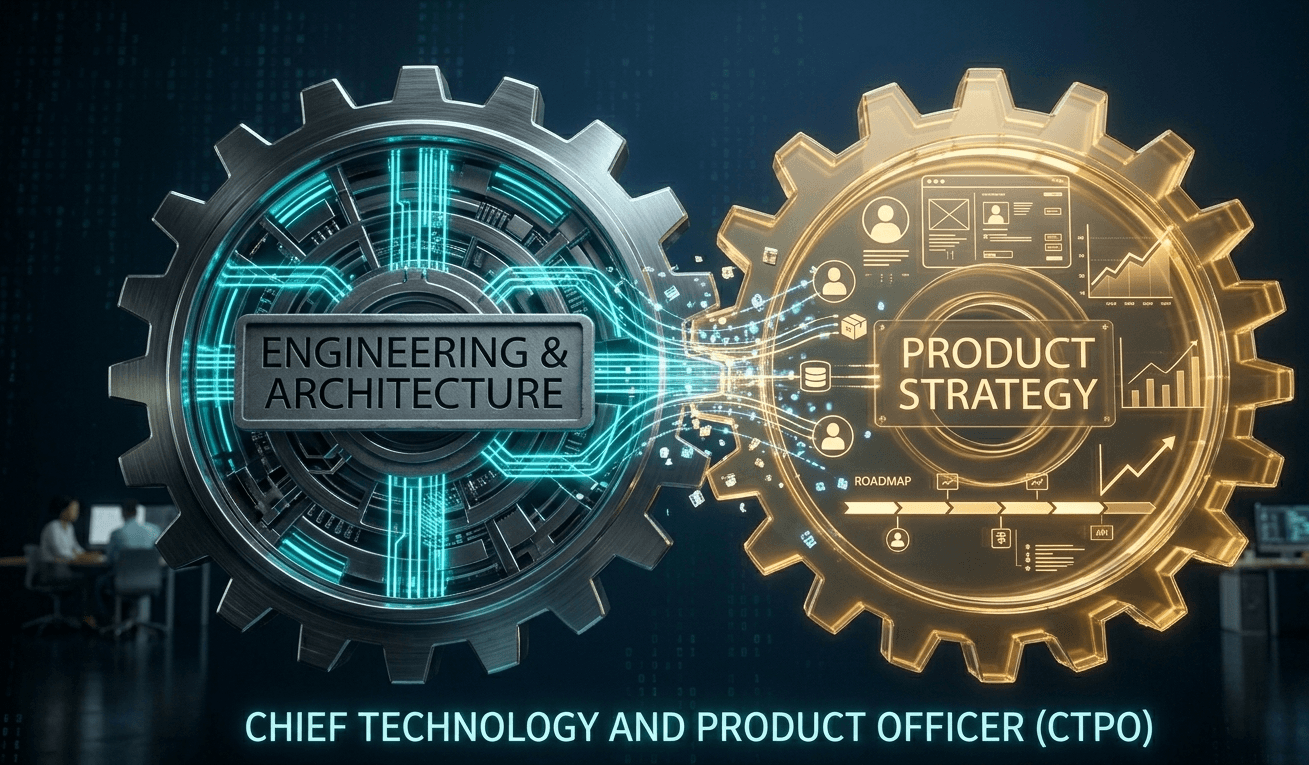
The Chief Technology and Product Officer (CTPO) — sometimes written as CPTO — merges the CTO and CPO roles into a single C-suite executive accountable for both product strategy and technology execution. In product-led SaaS, fintech, gaming, and AI-native companies, this unified role eliminates silos, speeds up decisions, and keeps engineering and product working from the same roadmap. This guide breaks down what a CTPO actually does, the KPIs that matter, when the model works (and when it doesn't), and how CTOs or CPOs can grow into the role.
Alexander Stasiak
Apr 07, 2026・13 min read
Ready to centralize your know-how with AI?
Start a new chapter in knowledge management—where the AI Assistant becomes the central pillar of your digital support experience.
Book a free consultationWork with a team trusted by top-tier companies.