Mapbox Integration Partner in Europe – Why Local Expertise Matters

Table of Content
Looking for a Mapbox integration partner in Europe to bring your digital mapping vision to life?
Whether you’re developing logistics software, a mobility app, or data-driven urban solutions, choosing the right partner can determine your project’s success.
European partners bring a unique advantage — compliance with EU regulations, proximity for collaboration, and access to some of the world’s best engineering talent.
In this guide, we’ll explore why Europe leads in Mapbox development, how to select the right integration partner, and why countries like Poland and Central Europe are becoming top destinations for cost-effective, high-quality mapping solutions.
Key Takeaways
- European Mapbox partners ensure full compliance with EU data regulations (GDPR) and deliver solutions tailored to local markets.
- Choose partners with strong technical expertise, proven Mapbox experience, transparent processes, and post-launch support.
- Poland and Central Europe have become premier tech hubs, combining deep engineering talent, cost efficiency, and advanced infrastructure.
Benefits of Working with a European Mapbox Partner

Partnering with a Mapbox expert in Europe provides significant strategic benefits for any organization implementing location-based technology.
1. Compliance and Data Security
European development firms are well-versed in GDPR and EU data protection laws, ensuring your mapping solutions handle user data responsibly and compliantly. This is especially critical for businesses in mobility, logistics, or health tech, where location tracking requires strict data governance.
2. Regional Expertise and Market Fit
Local experts understand regional user behavior, language nuances, and design expectations.
Their proximity enables faster communication, real-time feedback, and collaboration across similar time zones — reducing friction and increasing project velocity.
3. Efficient Communication and Cultural Alignment
European partners share communication standards and work ethics that align with global expectations. This clarity and reliability improve delivery outcomes and ensure that projects stay on schedule and within scope.
How to Select the Right Mapbox Integration Partner
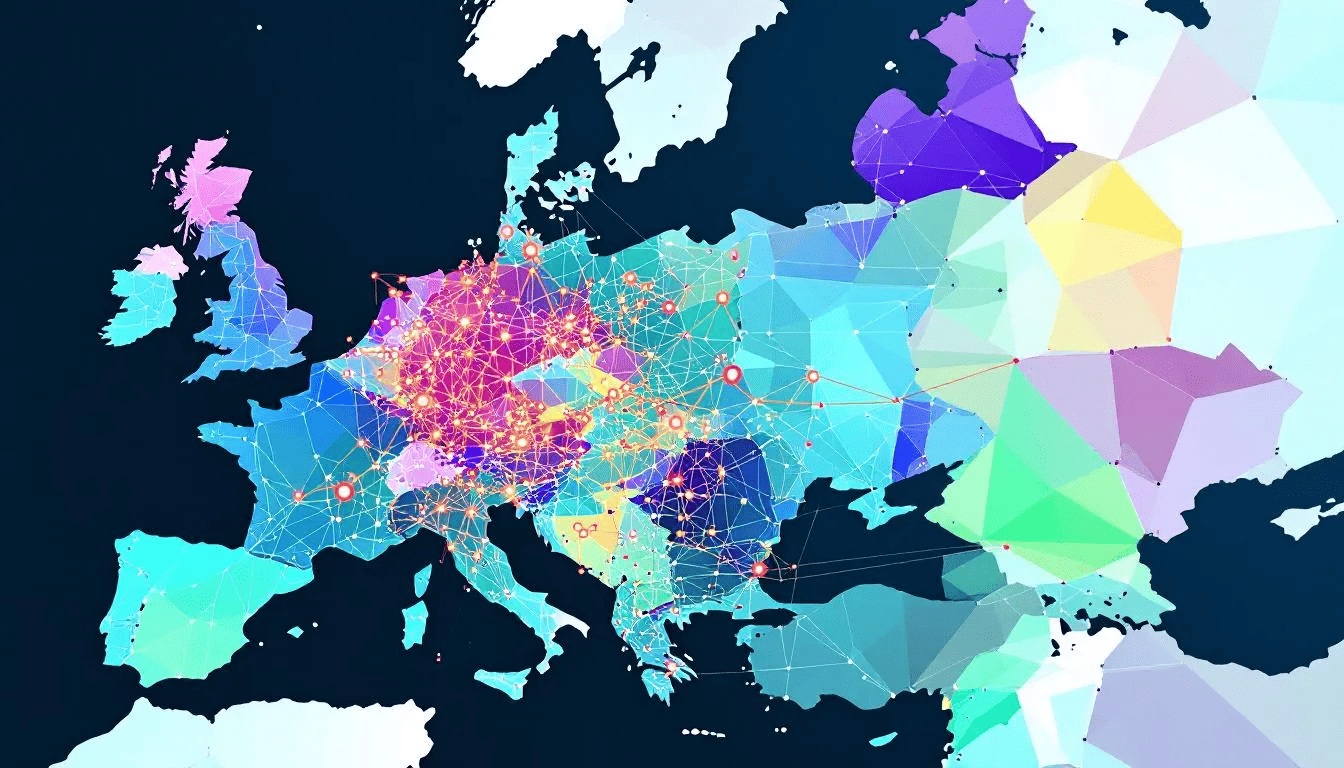
Selecting the right Mapbox integration partner is crucial for your mapping solutions’ success. Choosing the ideal Mapbox development company requires a structured approach.
Here are the four criteria that should guide your decision:
- Technical Expertise:
Look for developers with proven experience in Mapbox GL JS, Directions API, and data visualization. Ask for code samples or demos of live implementations. - Industry Experience:
The right partner understands your sector — whether it’s logistics, real estate, travel, or smart cities — and can apply relevant best practices. - Process Transparency:
Request insights into their agile workflow, sprint planning, and QA methodology. Transparency ensures predictability. - Post-Launch Support:
Reliable partners offer continuous maintenance, updates, and optimization — not just delivery.
Why Poland and Central Europe Are Tech Hubs

Poland and Central Europe have become leading destinations for software outsourcing, thanks to a powerful mix of skill, affordability, and innovation.
Poland, in particular, stands out in the global IT market due to:
- Skilled engineers
- Cost-efficient solutions
- Emphasis on STEM education, ensuring a steady output of highly qualified graduates These factors strengthen the tech industry.
Poland’s appeal as a leading IT outsourcing destination is supported by:
- A stable legal framework as an EU member
- Strong infrastructure supporting the tech industry
- Lower cost of living, allowing for competitive labor costs while maintaining high-quality service delivery
Central Europe leverages its strategic location, offering businesses access to both Western and Eastern European markets. This unique position, combined with a robust talent pool and cost-effective solutions, makes Central Europe an ideal choice for tech partnerships. Collaborating with firms in Poland and Central Europe allows businesses to tap into a rich vein of expertise and innovation.
1. World-Class Engineering Talent
Polish and Central European engineers rank among the best globally in STEM education and software development proficiency, consistently outperforming peers in coding competitions and AI research.
2. Cost-Efficient Excellence
The region offers premium technical quality at competitive costs, making it a strategic choice for companies seeking efficiency without compromise.
3. EU Stability and Modern Infrastructure
With EU membership, a transparent legal framework, and high connectivity standards, the region ensures secure and compliant project environments for international clients.
Our Experience with European Clients
At Startup House, we’ve partnered with top European brands to deliver scalable, data-driven mapping and software solutions. Our collaborations highlight how strong partnerships fuel innovation and measurable business outcomes.
Case Study 1: Siemens Healthineers AG
Challenge: Digitize sales processes and enhance field team efficiency.
Solution: Developed responsive web and mobile apps for real-time data visualization and route optimization.
Result: Improved productivity and data accessibility across international teams.
Case Study 2: CHOOOSE (Norway)
Challenge: Rapidly expand a climate-tech platform’s capabilities using a hybrid team model.
Solution: Provided specialists in front-end, back-end, QA, and design, accelerating delivery cycles.
Result: Transformed from a vendor relationship into a long-term strategic partnership, driving scalability and sustainability.
Case Study 3: Flyv (Germany)
Challenge: Integrate advanced mobility data into a modern mapping ecosystem.
Solution: Conducted on-site workshops and implemented knowledge transfer between teams.
Result: Achieved seamless integration and enhanced cross-team collaboration.
Specialized Mapbox Development Services
European Mapbox integration partners offer a full range of specialized services designed to scale mapping applications across industries.
Custom Software Development
From logistics dashboards to AI-enhanced route optimization, custom software ensures your mapping solution fits your exact needs.
At Startup House, we integrate Mapbox APIs with AI and predictive analytics, helping clients improve traffic modeling, geolocation accuracy, and real-time tracking.
API Integrations
Seamless integration of Mapbox APIs enables interoperability between mapping tools, data layers, and third-party systems.
Our developers ensure fast, stable connections between your app and Mapbox data pipelines, optimizing both performance and UX.
Advanced Mapping Applications
We create interactive, high-performance mapping apps using Mapbox GL JS, combining custom markers, layers, and real-time analytics.
From urban mobility to travel planning, our team designs intuitive geospatial experiences that engage and inform.
Mapbox in Action: Industry Applications
1. Logistics and Delivery
Mapbox’s real-time route optimization and tracking features allow logistics companies to visualize driver routes, monitor traffic, and reduce delivery times.
Companies like Picnic improved delivery times by 4% after integrating Mapbox’s Optimization API.
2. Real Estate and Urban Planning
Developers use Mapbox to visualize property boundaries, zoning data, and demographics, providing actionable insights for buyers and agents. Interactive layers bring complex geospatial data to life.
3. Travel and Tourism
Custom maps and itinerary planners powered by Mapbox enhance user experiences for travel startups and tour operators.
Real-time navigation tools help users explore destinations with interactive, data-rich guidance.
4. Smart Cities and Mobility
Mapbox’s Directions API and traffic data help governments and startups optimize routes, monitor congestion, and improve public transport planning — key pillars of smart city initiatives across Europe.
Benefits of Outsourcing Mapbox Development

Outsourcing your Mapbox project to a certified partner provides multiple strategic advantages:
- 🚀 Faster Delivery: Up to 50% quicker than internal development due to established expertise.
- 💰 Lower Costs: Reduce hiring and training expenses by leveraging ready-made teams.
- 🧠 Specialized Knowledge: Access engineers who live and breathe Mapbox APIs, reducing risk and accelerating innovation.
- 🔧 Maintenance-Free Scaling: Continuous updates, performance monitoring, and version management handled for you.
Challenges of In-House Mapbox Implementation
Building and maintaining a Mapbox solution internally often means:
- A steep learning curve for developers unfamiliar with Mapbox GL JS or API structure.
- Higher costs due to training, debugging, and maintenance overhead.
- Difficulty staying updated with frequent Mapbox SDK changes and deprecations.
Outsourcing to an experienced partner eliminates these barriers, letting you focus on core product development while experts handle mapping complexity.
Continuous Support for Long-Term Success
The best Mapbox integration partners provide continuous optimization, ensuring your maps evolve with user needs and technology trends.
Ongoing support includes:
- SDK and API version updates
- Security and token management
- UX performance audits
- Feature expansion and roadmap alignment
This proactive approach ensures your mapping application remains reliable, scalable, and future-proof.
How to Start Working with a Mapbox Integration Partner
- Define Your Objectives:
Outline your mapping goals — visualization, analytics, or route optimization. - Evaluate Technical Fit:
Request project portfolios and confirm expertise in Mapbox, React, or WebGL. - Set Expectations Early:
Align on KPIs, timelines, and deliverables in an initial consultation. - Collaborate Transparently:
Maintain shared communication channels and agile workflows.
At Startup House, we treat every collaboration as a partnership — not just a project.
Our agile approach ensures visibility, accountability, and results from day one.
Conclusion: Partner Locally, Scale Globally
Partnering with a Mapbox integration expert in Europe unlocks the power of data-driven location intelligence while ensuring compliance, scalability, and innovation.
Whether you’re optimizing delivery routes, designing immersive travel maps, or building enterprise dashboards, working with an experienced partner saves time, reduces risk, and drives measurable results.
🚀 Let’s Build Smarter Maps Together
At Startup House, we help startups and enterprises design, integrate, and scale powerful Mapbox-based solutions — from prototype to enterprise rollout.
👉 Talk to our Mapbox developers to bring your geospatial ideas to life.
Frequently Asked Questions
What are the benefits of working with a European Mapbox partner?
European Mapbox partners ensure GDPR compliance, offer regional insights, and provide faster communication within your time zone for smoother collaboration.
What should I look for when selecting a Mapbox integration partner?
Prioritize proven Mapbox experience, transparent communication, post-launch support, and an agile delivery process.
Why is Poland considered a tech hub for IT outsourcing?
Poland combines world-class software engineering education, EU stability, and cost-effective service quality, making it ideal for high-value tech partnerships.
How can I start a Mapbox project?
Define your objectives, discuss them with potential partners, and align on goals and scope during an initial consultation.
What challenges come with in-house Mapbox implementation?
In-house teams often face steep learning curves, maintenance overhead, and slower delivery compared to specialized partners.
How this article was made. Drafted with AI assistance, then fact-checked and edited by our team. Editorial responsibility: Startup Development House sp. z o.o. Read our AI content policy
Digital Transformation Strategy for Siemens Finance
Cloud-based platform for Siemens Financial Services in Poland

You may also like...

Smart Mirrors in Retail: Enhancing Shopping Experiences with Technology
Smart mirrors are transforming retail stores by offering interactive shopping experiences, virtual try-ons, and personalized recommendations. With features like augmented reality and real-time inventory integration, these technologies enhance customer engagement and streamline the in-store experience.
Alexander Stasiak
May 14, 2024・9 min read

AI Agents for Factory Workflow Optimization
How autonomous agents orchestrate the whole factory — resolving bottlenecks, scheduling maintenance and reallocating resources before output suffers.
Alexander Stasiak
Sep 28, 2026・8 min read

AI in Fintech: Startup House Projects, Lessons, and Outcomes
Fintech customers expect consumer-grade speed, while regulators expect bank-grade control. This article shows how Startup House has handled that tension in three projects: automated 24/7 credit decisions for Siemens Financial Services, a cyber risk platform that grew revenue 150% in a year, and a climate fintech team for CHOOOSE assembled in 2 weeks. Each project comes with the lesson it taught us. The article closes with five rules for AI in finance, from grounding every answer in verified data to designing tenant isolation into the architecture.

Marek Pałys
Oct 01, 2026・5 min read

Flutter App Best Practices: Building Fast, Clean & Scalable Apps in 2026
Building high-quality Flutter apps in 2026 requires more than shipping features fast. This guide covers practical best practices for performance, clean architecture, state management, testing, and secure backend integration—so your apps stay scalable and maintainable from day one.
Alexander Stasiak
Feb 17, 2026・15 min read

Why Knowledge Base Content Becomes Outdated
Your knowledge base was a source of truth once. Now it's a liability. Products have changed, teams have restructured, and the documentation your employees and customers rely on is silently giving wrong answers.
Alexander Stasiak
Mar 17, 2026・11 min read

AI Agents for Predictive Maintenance and Asset Reliability
How autonomous agents read vibration, thermal and acoustic data to predict failures weeks ahead — and act on them without waiting for a human.
Alexander Stasiak
Aug 29, 2026・9 min read
Recently added

How Startup House Cut Leasing Applications to 2 Minutes for Siemens Financial Services
Leasing used to mean paperwork, manual credit checks, and decisions that waited for office hours. For Siemens Financial Services Poland, Startup House replaced that with SimplyLease Online: an application customers complete in about 2 minutes and an automated credit decision delivered in about 7, at any hour. This case study shows how the platform was built within Siemens Group security standards, how it connects to Siemens systems and external data providers, and what a partnership running since 2016 has delivered. It closes with three lessons that apply to almost any financing or lending product.
Alexander Stasiak
Oct 06, 2026・5 min read

How a Cybersecurity Platform Serving Fortune 500 Clients Cut Onboarding by 95% with an AI Agent Built by Startup House
A cyber risk platform trusted by Fortune 500 companies had a familiar problem: customers respected it but opened it once a quarter, and onboarding took 45 minutes of guided setup. Startup House built Aria, an AI agent embedded inside the product, with a four-layer interface that serves board members, CFOs, and CISOs in one panel. Onboarding dropped by 95% to under 2 minutes, data exploration became fully self-serve, and the platform turned into a daily decision-support tool. This case study explains the interface, the tenant-isolation architecture, and why none of it required touching the platform's core codebase.
Marek Pałys
Oct 05, 2026・5 min read

AI and Digital Projects by Startup House: 5 Measurable Outcomes in Numbers
Claims are easy in software development, so this article sticks to numbers. It walks through five outcomes from Startup House client projects, from a 95% cut in onboarding time with an embedded AI agent to a 40% reduction in development costs for Omnipack. Each section says what kind of work produced the number and links to the public case study behind it. The closing section names three patterns these projects share, worth borrowing whether or not you work with us.
Alexander Stasiak
Oct 04, 2026・5 min read

Healthtech Software Development at Startup House: Compliance-First Projects and Results
In healthcare software, compliance is either an architecture decision or a retrofit. This article shows what designing it in from day one looks like across three Startup House projects: a sales platform for Siemens Healthineers active in more than 60 countries, a dementia care MVP shaped by 7 user testing sessions with patients and caregivers, and Doogie, a HIPAA-grade AI showcase built in 2 months. It also explains how RAG keeps clinical AI answers traceable to verified sources, and why patient data is never used to train models. For MedTech companies and health SaaS platforms, it is a practical look at what compliance-first engineering means beyond the label.
Marek Pałys
Oct 03, 2026・5 min read

Edtech Development at Startup House: What We've Built and What It Changed
EdTech platforms fail for UX reasons more often than technical ones: learners drop off, content doesn't scale, and ROI stays invisible. This article shows how Startup House avoids that with phased delivery and real user testing, using two projects as proof. Graspify went from a bold idea to a microlearning platform that trained hundreds of employees during a corporate event, and LITTLEWINE got an investor-ready scope from 10 user interviews in 2 weeks. It also covers AI learning tools that answer only from approved content and can go live in as little as 2 weeks.
Alexander Stasiak
Oct 02, 2026・5 min read
AI in Fintech: Startup House Projects, Lessons, and Outcomes
Fintech customers expect consumer-grade speed, while regulators expect bank-grade control. This article shows how Startup House has handled that tension in three projects: automated 24/7 credit decisions for Siemens Financial Services, a cyber risk platform that grew revenue 150% in a year, and a climate fintech team for CHOOOSE assembled in 2 weeks. Each project comes with the lesson it taught us. The article closes with five rules for AI in finance, from grounding every answer in verified data to designing tenant isolation into the architecture.
Marek Pałys
Oct 01, 2026・5 min read
Ready to centralize your know-how with AI?
Start a new chapter in knowledge management—where the AI Assistant becomes the central pillar of your digital support experience.
Work with a team trusted by top-tier companies.


