Siemens Healthineers: Mobile CRM for 5,000+ Sales Reps in 60 Countries

- Client
- Siemens Healthineers AG
- Country
- 🇩🇪 Germany
- Services
- Product DesignSoftware DevelopmentPrototypeSystems Integration
- Technologies
- TypeScriptGraphQLMicroservicesElasticsearchPostgreSQLNeo4j (PoC)
- Key results
- 5000sales reps as users of the solution
- 60 countriesimplementation
- 10x fasterDatabase queries
Siemens Healthineers AG, headquartered in Erlangen, Germany, is a market leader in medical technology. Our collaboration with SH began in May 2020. The goal: leverage our custom software development expertise to support the Digital Sales Companion department and streamline the daily work of more than 5,000 sales professionals worldwide.
From prototype to a tool used worldwide
How Agile collaboration changed day-to-day work in the Siemens Healthineers sales team.

Kickoff: from workshops to MVP
We kicked off the collaboration with intensive product discovery workshops, using agile methodologies (Agile) tailored to the scale and processes of an enterprise organization. From day one, we were responsible for scoping and the solution architecture, as well as software development.
Our priority was the swift rollout of a Minimum Viable Product (MVP) – a stable product version that would validate key business hypotheses and confirm a short time-to-market for the sales enablement tool. From the very first day, the solution wasn’t an isolated application: we designed it to natively integrate with the extensive ecosystem of Siemens Healthineers sales tools.
Challenges and an Agile approach
The main organizational challenge was to build an interdisciplinary team capable of running multiple streams of work (workstreams) in parallel and responding flexibly to the dynamic needs of Siemens Healthineers’ global sales organization. On the engineering side, the key was efficient aggregation and flawless integration of data coming from many distributed, heterogeneous systems.
The first milestone was to deliver a stable MVP based on PostgreSQL. Thanks to a precisely defined scope (scoping) and the selection of the right deployment tools, the platform quickly moved into continuous integration and delivery (CI/CD) – regularly enriched with new features in short, predictable release cycles.

Technology stack and architectural decisions
Our technology choices are rooted in engineering pragmatism – we avoid decisions driven by fleeting trends (hype-driven development). Every element of the architecture solves a specific business problem and ensures the platform’s performance and readiness for horizontal scaling:
- TypeScript: Provides static typing and high code predictability in the JavaScript environment. In a project of this scale, that means significantly easier codebase (maintainability), faster refactoring, and eliminating an entire class of errors before they ever reach production.
- Elasticsearch: Moving from the MVP stage to full production required a dedicated search engine. Elasticsearch delivered near-instant query response times, maintaining consistently low latency even amid a sharp increase in indexed data volume.
- Microservices architecture: As business-domain complexity grew, decomposing the monolith into microservices preserved full control over the system. Individual services scale independently based on load, are not tied to a single infrastructure, and can be seamlessly distributed across multi-region environments.
- GraphQL: Introducing GraphQL was a breakthrough for the frontend teams. In a 30-person development organization, a precise API contract significantly streamlined cross-team communication, eliminated the issue of data over-fetching (over-fetching), and shortened the time to deliver subsequent application modules.
- Neo4j (graph database): We never introduce technology blindly – every critical architectural change is preceded by testing and hard data. When relationships between data became a key element of the business domain, we ran a Proof of Concept (PoC) using the Neo4j graph database. The results clearly confirmed the decision: for queries over densely connected data structures, response times were from 10 up to even 100 times shorter compared to the existing relational PostgreSQL database.
Every component in our technology stack serves a well-defined purpose: it removes current bottlenecks and gives the architecture the flexibility needed for the product’s next stages of growth.
Project management and communication
Clear communication and agile process management were the foundation of the entire endeavor’s success. A collaborative approach and efficient coordination of work were reflected in an official review on Clutch, in which Holger Rohden, Program Manager Digital Sales Companion at Siemens Healthineers AG, emphasized that the Startup House team “consistently demonstrated a deep understanding of our needs and business challenges.”
Project completed on time and within scope; the quality of the final solution exceeded our expectations.
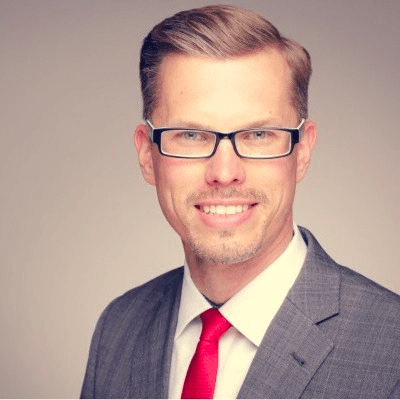 Holger RohdenProgram Manager Digital Sales Companion @Siemens Healthineers AG
Results
Achieve ambitious goals with SH’s expertise
Book a free consultationOther case studies


Ready to centralize your know-how with AI?
Start a new chapter in knowledge management—where the AI Assistant becomes the central pillar of your digital support experience.
Work with a team trusted by top-tier companies.


