App Modernization Tools and Strategies
Alexander Stasiak
Apr 08, 2026・13 min read
Table of Content
Key Takeaways
What Is Application Modernization in 2024–2026?
Why Modernize Now? Business Drivers and Risks of Standing Still
Core Application Modernization Strategies (The Modern “Rs”)
Designing Your Application Modernization Journey
Key App Modernization Tools Across the Lifecycle
Cloud Migration, Cloud-Native Architectures, and Hybrid Models
Data Management and Integration in Modernization
Security, Compliance, and Reliability by Design
Organizational and Cultural Shifts: Enabling Continuous Modernization
Measuring Success: KPIs for Application Modernization
Conclusion: Building a Sustainable Modernization Program
FAQ: App Modernization Tools and Strategies
How do I choose the right modernization strategy for a specific application?
Which application modernization tools provide the most impact early in the journey?
How long does a typical application modernization project take?
Can we modernize applications without disrupting day-to-day operations?
How does AI fit into application modernization efforts?
Application modernization is no longer just a cloud migration exercise. For many organizations, it is now a structured modernization process that combines cloud computing, automation, AI, security, data management, and disciplined application development.
Key Takeaways
- Application modernization is now about cloud native architectures, automation, and AI-assisted tooling, not simple “lift-and-shift.”
- Successful app modernization strategies usually combine rehost, replatform, refactor, rearchitect, rebuild, replace, retire, and retain decisions per application.
- The best application modernization tools work together across discovery, automated analysis tools, code refactoring, CI/CD, observability, and security.
- Data management, API-first integration, and hybrid cloud are critical when moving from legacy environments to modern platforms.
- App modernization should be treated as an ongoing program measured by business value, cost, reliability, security, agility, and sustainability.
What Is Application Modernization in 2024–2026?
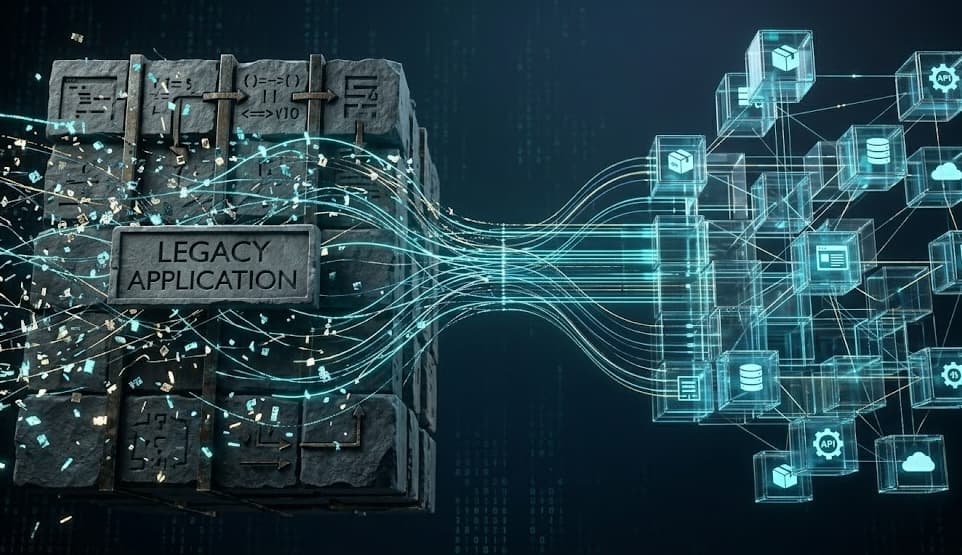
Application modernization is the work of transforming legacy applications such as .NET Framework 4.x, Java EE, mainframe systems, and client-server apps into secure, scalable, cloud-ready, and cloud native systems. It includes revitalizing outdated applications while protecting core functionality and existing investments.
This goes beyond moving virtual machines into cloud platforms. Modernization efforts may include breaking monoliths into microservices, adopting containers and Kubernetes, building modular architecture, using modern frameworks, automating continuous integration, and adding observability and security from the start.
Legacy modernization and application modernization are often used interchangeably, but legacy modernization usually focuses on older legacy systems such as COBOL, mainframes, or proprietary platforms. Application modernization can also include existing applications from the 2000–2015 era that still run business operations but no longer meet current and future needs.
Typical starting points include aging on-prem data center apps, monolithic ERP or CRM extensions, custom line-of-business tools, tightly coupled integration hubs, and existing legacy applications that rely on outdated systems.
Why Modernize Now? Business Drivers and Risks of Standing Still
The push to modernize existing apps is being driven by business pressure, not just new technologies.
Key drivers include:
- Reducing technical debt and maintenance costs
- Improving time-to-market for products and mobile apps
- Lowering infrastructure and licensing spend
- Meeting new compliance and security requirements
- Enabling analytics, machine learning, and AI-powered services
- Improving application performance and resource utilization
Concrete triggers are everywhere. Windows Server 2012 reached end of support in October 2023, according to Microsoft lifecycle guidance. Many organizations also struggle to find COBOL, VB6, or classic ASP developers.
Modernized applications are designed for rapid change, enabling businesses to roll out new features faster and respond swiftly to customer feedback and market trends, thus improving overall agility. Organizations that modernize their applications often experience reduced costs associated with maintaining outdated systems, as modernized applications generally cost less to maintain, update, and scale.
Standing still creates risk. Legacy architectures limit scalability, resiliency, and integration with software as a service platforms. They also increase the attack surface when old systems cannot be patched. Application modernization enhances security by leveraging the latest infrastructure and frameworks, allowing organizations to fix vulnerabilities and implement advanced security protocols.
The challenge is real: 93% of IT leaders found their application modernization experience to be extremely or somewhat challenging, highlighting the common hurdles organizations face during transformation efforts. Complexity of legacy systems is cited as the top organizational challenge in application modernization, making it difficult to integrate new technologies and processes.
Core Application Modernization Strategies (The Modern “Rs”)
Application modernization strategies are commonly organized using the “Rs” framework. This helps teams decide what to do with each application instead of applying one approach to the entire portfolio.
The application modernization framework, known as the “Rs” of modernization, includes strategies like Replace, Retain, Retire, Rehost, Replatform, Rewrite, and Refactor, which help organizations determine the best path for their legacy applications.
Another common version is the “7 Rs” framework, which includes Rehost, Replatform, Refactor, Repurchase, Retire, and Retain.
Here is how the main modernization approaches work:
| Strategy | Best fit | Level of code change |
| Retain | Stable systems with low change needs | None |
| Rehost | Fast move from on-prem VMware to cloud IaaS | Minimal |
| Replatform | Move to managed cloud services or PaaS | Low to moderate |
| Refactor | Improve legacy code and structure | Moderate |
| Rearchitect | Shift to microservices, APIs, or events | High |
| Rebuild / Rewrite | Code is brittle or unsupported | Very high |
| Replace / Retire | SaaS is better, or app has no value | Varies |
Application modernization strategies can include various approaches such as rehosting, replatforming, refactoring, and rewriting, each distinguished by the level of code changes made to the applications.
Rehost is useful when speed matters. For example, a company may move workloads from a private data center into cloud IaaS quickly. The limitation is that rehosted apps rarely gain full cloud native capabilities like elastic scaling or managed resilience.
Replatforming is a middle path. A web app might move to Azure App Service, AWS Elastic Beanstalk, or a managed database with limited code changes. Cloud platforms offer scalable infrastructure, managed databases, and built-in compliance for modernization efforts.
Refactor and rearchitect are deeper. They may involve domain-driven design, breaking a monolith into services, replacing SOAP with REST or GraphQL, and creating modern interfaces for other systems.
Incremental modernization, often referred to as the “Strangler Fig” pattern, allows organizations to gradually replace components of a monolithic application with new implementations, enabling a controlled transition to modern architectures.
Designing Your Application Modernization Journey
A strong application modernization journey is phased, not random. The typical flow is:
- Comprehensive assessment
- Portfolio prioritization
- Modernization roadmap
- Pilot modernization projects
- Scaled rollout
- Continuous optimization
A comprehensive assessment of existing applications is essential before modernization, as it helps identify the most pressing challenges and prioritize modernization efforts based on business needs.
A comprehensive assessment of existing applications is essential before embarking on modernization efforts, as it helps identify the current state, architecture, dependencies, and alignment with business needs.
Evaluating the existing application portfolio involves auditing applications to understand their usage, criticality, and pain points, which is crucial for determining the best modernization strategy.
Portfolio assessment frameworks such as Gartner’s TIME can be used to score applications based on business value and technical health. You can also use dimensions similar to AWS application assessment guidance, such as strategic fit, technical adequacy, financial value, and digital readiness.
Determining the return on investment (ROI) potential of applications is a key part of the assessment process, allowing organizations to prioritize modernization efforts based on business impact and resource availability.
The best roadmap usually spans 12–24 months and starts with high-value, moderate-risk candidates. Don’t make the mistake of beginning with the most complex legacy systems unless the risk is unavoidable.
Balancing modernization with ongoing development can strain resources, leading organizations to adopt incremental strategies that allow for continued delivery of business value while gradually improving architecture.
Choosing the right technologies is crucial for successful application modernization, with organizations often favoring microservices, containers, and cloud-native solutions that align with their long-term business objectives.
Business stakeholders, security, operations, and data teams should be involved early. Many organizations run old and new systems in parallel while existing operations continue.
Key App Modernization Tools Across the Lifecycle
Modernization tools don’t replace strategy, but they dramatically accelerate the application modernization journey. Effective modernization toolchains focus on automation and reducing the traditional effort required for enterprise-scale modernization.
Most teams assemble a toolchain across these stages:
- Assess: inventory, dependency mapping, APM, cost analysis
- Design: architecture modeling, API planning, domain mapping
- Build: refactoring tools, containers, modern frameworks
- Test: regression, performance, SAST, DAST, SCA
- Deploy: CI/CD, infrastructure as code, release automation
- Operate: observability, logging, tracing, AIOps, FinOps
Discovery tools help identify existing systems, unused features, dependencies, and hidden business logic. Code analysis platforms visualize call graphs, detect risky legacy code, and estimate refactoring effort.
AI tools automate labor-intensive tasks like code analysis, test generation, and requirements gathering. 78% of organizations are using or planning to use AI to support application modernization, leveraging its strengths in identifying patterns, analyzing data, and automating tasks.
AI technologies can help optimize performance, reduce manual tasks, automate testing, identify legacy code, and assist in writing code during the modernization process. Organizations that are using AI in their modernization efforts report that it significantly enhances the efficiency and effectiveness of the modernization process.
As of 2026, app modernization is increasingly defined by “Agentic” refactoring using autonomous AI bots.
Containerization tools package application code and dependencies together to ensure consistent performance across diverse environments. DevOps and CI/CD practices utilize automation tools to ensure continuous integration and delivery, shrinking development lifecycles and reducing human error.
Integration platforms and API gateways help expose legacy functionality through REST or GraphQL. Low-code platforms can help rebuild front ends quickly, but they still need governance.
Security tools should include SBOM generation, dependency scanning, and policy enforcement. Standards such as CycloneDX are commonly used for software bills of materials.
Cloud Migration, Cloud-Native Architectures, and Hybrid Models
Cloud migration is one part of application modernization, but cloud adoption has become the default path for many modern systems.
Common patterns include:
- IaaS lift-and-shift for speed
- PaaS migration using managed app platforms and databases
- Full redesign leveraging cloud native architectures
- Serverless functions for event-driven workloads
Cloud-native and serverless platforms allow teams to build event-driven components without managing underlying infrastructure. Leveraging cloud native architectures also makes it easier to use managed databases, messaging, caching, auto-scaling, blue-green deployments, and global delivery.
Hybrid cloud remains important from 2024–2026. Sensitive data, latency-sensitive workloads, and regulatory constraints often keep parts of the estate on-premises or in private clouds while modern applications move to public cloud.
Multi-cloud can help with resilience and lock-in concerns, but it adds complexity. Use it when there is a clear business reason, not just because it sounds flexible. Open standards, containers, Kubernetes, and portable observability reduce risk.
Cloud governance should start early. Tagging, budgets, FinOps practices, and policy as code prevent cloud spend from becoming the next form of technical debt. The CNCF annual survey shows how widely organizations are adopting cloud native technologies and automated release practices.
Data Management and Integration in Modernization
Data modernization often determines the speed and risk of application modernization projects.
Typical problems include:
- Tightly coupled schemas
- Stored procedures containing business logic
- Duplicate data silos
- Batch-heavy integrations
- Weak lineage and ownership
- Risk to data integrity during data migration
Modern data management may include data virtualization, warehouses, lakehouses, event streams, and real-time analytics. The goal is not always to move every database at once. The goal is to make data usable, governed, and secure.
For data migration, teams usually choose between big-bang and phased approaches. Phased approaches are safer for complex legacy systems because they support change data capture, dual-write patterns, read-only windows, and rollback plans.
API-led integration and messaging help decouple modernized services from legacy databases. Message queues and event buses allow new services to react to changes without tightly coupling old and new systems.
Security, Compliance, and Reliability by Design
Modernization is a chance to improve security rather than copy old risks into new infrastructure.
Start with:
- Zero-trust networking
- Centralized IAM and least privilege
- Secrets management
- Encryption in transit and at rest
- Secure software supply chain controls
- Automated compliance checks
NIST provides practical guidance for zero trust architectures, which is especially useful for hybrid cloud environments.
Shift-left security should be built into pipelines. SAST, DAST, SCA, and container image scanning can catch issues before deployment. This is more effective than relying on late-stage audits.
Reliability also needs design work. Use health checks, circuit breakers, auto-scaling, backups, regional disaster recovery, and tested rollback plans. Business continuity should be part of the architecture, not a document created after launch.
Depending on industry and geography, modernization projects may need to align with ISO 27001, PCI DSS, HIPAA, GDPR, CCPA, or data residency requirements.
Organizational and Cultural Shifts: Enabling Continuous Modernization
Tools and cloud technologies are not enough. Teams must change how they build, ship, and operate software.
DevOps and platform engineering support continuous modernization through self-service environments, standardized pipelines, reusable templates, and internal platforms. This lets teams focus on accelerated innovation instead of manually configuring infrastructure.
Upskilling is just as important. Engineers may need training in containers, Kubernetes, cloud native development, observability, security testing, and modern programming languages.
Governance should be practical, not bureaucratic. Use steering committees, architecture review boards, and clear decision frameworks to select modernization strategies per app.
Change management matters. Involve business stakeholders early, communicate timelines clearly, and show early wins. A small successful pilot can build more confidence than a large slide deck.
Measuring Success: KPIs for Application Modernization
A successful application modernization strategy needs measurable outcomes.
Useful business KPIs include:
- Lower run costs for infrastructure and licenses
- Reduced maintenance costs
- Faster feature delivery
- Revenue from new digital capabilities
- Better user satisfaction
- Higher developer productivity
Technical KPIs include:
- Deployment frequency
- Lead time for changes
- Mean time to recovery
- Incident rate
- Automated test coverage
- Critical vulnerability reduction
- Application performance improvements
Portfolio KPIs include the percentage of apps modernized, apps retired, apps moved to cloud services, and reduction in technical debt.
Defining green metrics involves incorporating sustainable architecture by refactoring monoliths into energy-efficient microservices. This is becoming more important as cloud cost, carbon impact, and resource utilization become part of technology investments.
Conclusion: Building a Sustainable Modernization Program
Application modernization is not a one-time migration. It is a long-term capability that blends app modernization tools, cloud platforms, disciplined data management, security, and cultural change.
Start with a focused assessment, choose a small set of high-impact applications, and prove your toolchain before scaling. The strongest programs protect existing investments while transforming legacy applications into modern systems that can evolve with the business.
Through 2026, AI-assisted development, Agentic refactoring, automation, and cloud native innovations will continue to reshape app modernization tools and strategies.
FAQ: App Modernization Tools and Strategies
How do I choose the right modernization strategy for a specific application?
Start with structured assessment. Review business criticality, architecture, technical debt, dependencies, compliance needs, cost, risk tolerance, and ROI potential.
Then map each app to options such as retain, rehost, replatform, refactor, rearchitect, rewrite, replace, or retire. A simple decision matrix can rank each option by cost, time-to-value, risk, and long-term alignment with cloud native goals.
Which application modernization tools provide the most impact early in the journey?
Discovery and assessment tools usually provide the fastest value. They help inventory existing apps, map dependencies, identify security gaps, and find performance bottlenecks.
APM and observability tools are also useful early because they show real usage patterns. Basic CI/CD and automated testing can deliver quick wins before deeper refactoring begins.
How long does a typical application modernization project take?
A simple rehost may take weeks. Replatforming a medium application may take a few months. Rearchitecting a large business-critical monolith into microservices can take 12–24 months.
The best approach is to break the work into milestones with incremental releases instead of waiting for one big launch.
Can we modernize applications without disrupting day-to-day operations?
Yes, but it requires planning. Common techniques include blue-green deployments, canary releases, shadow environments, phased user migration, and running old and new systems in parallel.
Regression testing, rollback plans, and clear communication with business teams are essential, especially for core systems.
How does AI fit into application modernization efforts?
AI can support code analysis, documentation, technical-debt detection, test generation, performance anomaly detection, and refactoring suggestions.
Generative AI can help engineers move faster, but it should be governed with code review, security scanning, IP policies, and human validation. Once applications are modernized, AI and machine learning services are easier to integrate into products and workflows.
Digital Transformation Strategy for Siemens Finance
Cloud-based platform for Siemens Financial Services in Poland

You may also like...
Cloud Computing And Software Development Services
Cloud infrastructure and software engineering have merged into a single discipline, and treating them separately creates technical debt. This guide covers the foundations of modern software in the cloud, the strategic benefits leaders actually realise, and the full lifecycle of a cloud-based build. It addresses legacy modernisation, the recurring challenges around cost and lock-in, and where managed AI services now fit. Industry applications and quality assurance standards complete the guide.
Alexander Stasiak
Jul 01, 2026・8 min read
Software Application Development Services
Application development is a series of consequential decisions, and stack choice is only the most visible one. This guide provides a strategic framework covering technology selection, industry-specific requirements and agile execution that keeps scope under control. It compares delivery and cost models so you can match spend to certainty, and shows where AI and data science produce real product value rather than novelty. A closing section catalogues the challenges that most often derail delivery.
Alexander Stasiak
Jul 16, 2026・6 min read
Application Development Solutions
Application development solutions cover the entire arc from strategic discovery to continuous scaling, and each phase has its own failure modes. This guide defines what modern solutions include, explains why discovery deserves real investment, and shows where custom engineering beats generic templates. It reviews agile sprint execution, industry-specific requirements and the engagement models that fit different growth stages. Security, compliance and time-to-market trade-offs are treated as engineering concerns rather than afterthoughts.
Alexander Stasiak
Aug 22, 2026・8 min read

Application Development In Cloud Computing
Running an application in the cloud and building it for the cloud are very different engineering decisions. This guide covers cloud-native development properly: the delivery models, the container and orchestration stack, and the CI/CD pipelines that make continuous deployment safe. It walks the lifecycle step by step, addresses the challenges teams hit around cost control and vendor lock-in, and compares long-term economics against on-premise alternatives. Industry examples and forward-looking trends round out the picture.
Alexander Stasiak
Aug 21, 2026・8 min read
Application Security Best Practices
pplication security from first commit to long-term maintenance — secure coding, automated testing, cloud and mobile protection, and a security-first culture.
Alexander Stasiak
Jun 20, 2026・11 min read
DevOps Security 2026
How to bake security into every stage of CI/CD with SAST, DAST, SCA, and a DevSecOps culture — so you ship fast and safe.
Alexander Stasiak
Jun 21, 2026・10 min read
Recently added
Application Development Solutions
Application development solutions cover the entire arc from strategic discovery to continuous scaling, and each phase has its own failure modes. This guide defines what modern solutions include, explains why discovery deserves real investment, and shows where custom engineering beats generic templates. It reviews agile sprint execution, industry-specific requirements and the engagement models that fit different growth stages. Security, compliance and time-to-market trade-offs are treated as engineering concerns rather than afterthoughts.
Alexander Stasiak
Aug 22, 2026・8 min read
Application Development In Cloud Computing
Running an application in the cloud and building it for the cloud are very different engineering decisions. This guide covers cloud-native development properly: the delivery models, the container and orchestration stack, and the CI/CD pipelines that make continuous deployment safe. It walks the lifecycle step by step, addresses the challenges teams hit around cost control and vendor lock-in, and compares long-term economics against on-premise alternatives. Industry examples and forward-looking trends round out the picture.
Alexander Stasiak
Aug 21, 2026・8 min read
Software Engineering Service
Engineering is a discipline of measurable, repeatable practice, and that is what separates a service from simple contract coding. This guide sets out the pillars of high-performance software engineering: strategic discovery, architectural design, rigorous testing and lifecycle maintenance. It compares cooperation models, explains how to choose a technology stack that suits your constraints, and walks a project from ideation to scale. A closing section looks at how AI is reshaping engineering practice itself.
Alexander Stasiak
Aug 20, 2026・7 min read
Software Programming Services
Programming services are only as valuable as the architecture and process wrapped around them. This guide sets out the pillars of high-impact programming, how to choose a technology stack, and the delivery models that have replaced simple hourly billing. It follows the lifecycle of a programming project, covers infrastructure and platform engineering, and reviews vertical-specific expertise. Advanced trends, common outsourcing pitfalls and a method for calculating ROI complete the guide.
Alexander Stasiak
Aug 19, 2026・9 min read
Application Outsourcing
Outsourcing applications is a governance problem as much as a sourcing one. This guide explains the strategic value of application outsourcing, compares the core engagement models, and covers stack selection and industry-specific requirements. It follows the outsourcing lifecycle from discovery through scaling, then examines the economics honestly, including where apparent savings turn into rework. Sections on engineering culture, platform engineering and the effect of AI on outsourcing close the picture.
Alexander Stasiak
Aug 18, 2026・9 min read
Custom Enterprise Application Development Services
Once an organisation outgrows off-the-shelf software, the question becomes how to build resilience rather than features. This guide explains why enterprises commission custom applications, and what modern architectural standards demand around scalability, security and interoperability. It follows the roadmap from discovery to deployment, reviews industry-specific applications, and addresses the integration and change-management challenges that make enterprise projects difficult. Practical answers to common questions close the guide.
Alexander Stasiak
Aug 17, 2026・6 min read
Ready to centralize your know-how with AI?
Start a new chapter in knowledge management—where the AI Assistant becomes the central pillar of your digital support experience.
Work with a team trusted by top-tier companies.