Fintech App Development: Services, Features, Tech Stack, Steps & Costs
Alexander Stasiak
Feb 02, 2026・15 min read
Table of Content
Our Full-Stack Fintech App Development Services
Custom Fintech App Development
Mobile Banking App Development
Digital Wallet & Payment App Development
Investment & Stock / Crypto Trading Platforms
Lending & P2P / BNPL Platform Development
RegTech, KYC & Compliance Platforms
Personal Finance & Money Management Apps
Must-Have Fintech App Features
Security & Fraud Prevention
User Experience & Interface Design
Account Aggregation & Management
Payments, Transfers & Cash Flow
Data Analytics, Insights & Notifications
In-App Support, Chatbots & Disputes
Social, Gamification & Financial Education
Types of Fintech Apps with Real-World Examples
Digital Banking & Neobanking Apps
Digital Wallets & Payment Apps
Insurance & InsurTech Apps
Investment, Wealth & Robo-Advisory Apps
Lending, BNPL & Microfinance Apps
Personal Finance, Budgeting & Planning Apps
RegTech & Compliance Apps
Crypto, Web3 & Digital Asset Apps
Key Steps to Develop a Fintech Application
Define the Niche, Users & Value Proposition
Plan for Legal, Licensing & Compliance
Design Product Architecture & UX
Build the MVP & Integrate Third-Party APIs
Testing, Security Audits & Compliance Validation
Launch, Monitor & Iterate
Security, Compliance & Risk Management in Fintech Apps
Security Architecture & Hardening
Fraud Monitoring & Transaction Risk Controls
Data Privacy & Governance
Compliance-by-Design & Audit Readiness
Tech Stack for Fintech App Development
Frontend Technologies
Backend, APIs & Microservices
Databases, Storage & Caching
Cloud Infrastructure, DevOps & Observability
AI, ML & Advanced Analytics in Fintech
Fintech App Development Costs & Timelines
Main Cost Drivers
Typical Timelines & Phasing
Why Partner with a Specialized Fintech App Development Company
Expertise Across Domains & Regulations
Battle-Tested Architectures & Accelerators
Long-Term Support, Scaling & Optimization
Key Takeaways
The way people manage money has fundamentally changed. Between 2024 and 2026, fintech app development has shifted from a niche innovation area to a mainstream expectation for financial service delivery. Users now demand smarter, safer, and quicker services compared to traditional banking infrastructure—and they’re getting them.
The numbers tell a compelling story. The global fintech market is projected to reach around $882 billion by 2030, with annual growth rates consistently exceeding 15%. Over 60% of the global population now uses fintech apps for everyday financial tasks, and more than 90% of Millennials rely on them for banking, budgeting, and investing. This isn’t a trend—it’s a permanent shift in how financial services operate.
If you’re a founder, product leader at a bank, or building a fintech startup, you need a practical roadmap. This guide covers everything: the services available, app types worth building, must-have features, recommended tech stacks, development steps, security and compliance requirements, and realistic cost expectations.
We’re writing this from the perspective of a specialist fintech development company that has built and scaled financial technology products across multiple markets. Our goal is to give you the clarity needed to make informed decisions—without the fluff.
Our Full-Stack Fintech App Development Services
Building financial software isn’t like building a typical consumer app. The stakes are higher, regulations are stricter, and users have zero tolerance for errors when their money is involved.
Our fintech app development services span the complete product lifecycle—from initial discovery and regulatory research through design, development, testing, launch, and ongoing maintenance. We’ve structured our capabilities around the core categories where financial institutions and startups need the most support:
- Mobile banking solutions: Full-featured banking apps for retail customers, SMBs, and corporate clients with real-time transaction capabilities
- Digital wallet apps: Closed-loop, semi-closed, and open wallet platforms supporting contactless payments, P2P transfers, and cross-border transactions
- Investment and trading platforms: Self-directed trading, robo-advisory, and wealth management systems with real-time market data integration
- Lending platforms: Digital lending, P2P lending, and BNPL solutions with automated underwriting and loan servicing
- RegTech and KYC platforms: Identity verification, AML monitoring, and compliance automation tools
- Personal finance apps: Budgeting, expense tracking, and financial wellness platforms with multi-bank aggregation
We build greenfield platforms from scratch and modernize legacy banking systems—whether that means migrating COBOL monoliths to microservices architectures or moving on-premise infrastructure to cloud-native deployments.
Security-by-design and compliance-by-design aren’t optional extras. They’re embedded across every service line, referencing standards like PCI DSS, PSD2, GDPR, AML, and KYC from day one.
Our experience spans US, EU, UK, and MENA markets, with the flexibility to adapt to country-specific regulations and open banking frameworks in each region.
Custom Fintech App Development
Every fintech product starts with a unique business model, target audience, and regulatory context. Cookie-cutter solutions rarely survive contact with real users and real regulators.
Custom fintech app development means designing and building bespoke products tailored to your specific needs. We architect cloud-native, API-driven platforms using microservices, event-driven architectures, and containerization—creating systems that scale with your business rather than constraining it.
Concrete examples of what this looks like in practice:
- Building a neobank MVP that handles digital onboarding, account management, and card issuance in a single market
- Creating a B2B payments platform that processes invoices, manages supplier relationships, and handles multi-currency settlements
- Developing a white-label lending product that other fintechs can integrate into their offerings
The discovery phase is critical. We work with you on value proposition refinement, monetization strategy, regulatory fit analysis, and technical feasibility assessment before writing a single line of code.
Most importantly, we build for extensibility. The modular architecture allows future integration with crypto services, BNPL providers, embedded finance partners, or whatever the fintech industry throws at you next.
Mobile Banking App Development
Mobile banking has moved beyond convenience—it’s now the primary channel for most banking customers. Retail clients expect to handle every banking task from their phones. SMBs need mobile access to cash management. Corporate treasurers demand real-time visibility across accounts.
We build mobile banking apps for regulated banks and credit unions that meet these expectations while maintaining the robust security measures required by financial regulators.
Key features we implement:
- Digital onboarding with integrated eKYC and document verification
- Account overview dashboards with real-time balance updates
- Domestic and international transfers with clear fee disclosure
- Bill payment scheduling and recurring payment management
- Card management (freeze, unfreeze, limit changes, PIN reset)
- Instant push notifications for transactions and security alerts
Security isn’t an afterthought. Every app includes biometric logins, device binding, secure enclave storage for sensitive data, and transaction signing for high-risk operations.
One regional credit union we worked with in 2023-2024 saw a 340% increase in mobile engagement after launching a mobile-only banking app that replaced their legacy web portal. The key was reducing onboarding friction from 15 minutes to under 3 minutes.
We design for omnichannel consistency—users get the same intuitive experience whether they’re on iOS, Android, tablet, or accessing the web banking portal.
Digital Wallet & Payment App Development
Digital wallets have exploded in usage since 2020, and 2024 marks a turning point where they’re becoming the default payment method for younger demographics. Contactless payments, in-app purchases, and cross-border transfers all flow through wallet infrastructure.
We build different wallet types based on your regulatory status and business model:
- Closed-loop wallets: Usable only within your ecosystem (retail chains, transit systems)
- Semi-closed wallets: Accepted at authorized merchants but no cash withdrawal
- Open wallets: Full functionality including ATM withdrawals and bank transfers
- Multi-currency wallets: Supporting FX conversion and international payments
Core features include:
- Card tokenization for secure storage
- NFC and QR code payment acceptance
- P2P transfers and bill splitting
- Loyalty program and rewards integration
- Transaction history with smart categorization
Integration with major payment networks is essential. We connect to Visa and Mastercard token services, Apple Pay, Google Pay, and payment gateways like Stripe or Adyen as the use case requires.
Behind the scenes, the real complexity lies in settlement, reconciliation, and risk rules. These back-office capabilities determine whether your wallet scales profitably or hemorrhages money to fraud and operational errors.

Investment & Stock / Crypto Trading Platforms
The investing landscape has fundamentally changed. Users expect access to stocks, ETFs, crypto, and fractional shares from a single mobile app—often with zero commission fees. The old model of calling a broker is dead for retail investors.
We build investment management systems that handle this hybrid reality:
- Order book management with support for market, limit, and stop orders
- Real-time quotes and charting with sub-second latency requirements
- Portfolio dashboards showing allocations, performance, and risk metrics
- Robo-advisory modules with automated rebalancing based on risk profiles
- Tax reporting tools including cost basis tracking and capital gains calculations
Regulatory requirements vary significantly by market. In the US, SEC and FINRA rules govern broker-dealer operations. In the EU, MiFID II sets the framework. We architect platforms that can adapt to local licensing requirements without complete rebuilds.
We support multiple trading models within the same platform:
- Self-directed trading for experienced investors
- Copy trading and social features for community-driven platforms
- Robo-advisors for hands-off wealth management
- Micro-investing for users starting with small amounts
Infrastructure matters enormously. Low-latency data feeds, integration with broker APIs, and high-availability architectures prevent the outages that destroy user trust during volatile markets.
Lending & P2P / BNPL Platform Development
Digital lending has grown consistently since 2020, with P2P platforms and BNPL providers capturing significant market share from traditional lenders. The common thread: faster decisions, simpler applications, and better user experience.
Our lending platforms cover the complete loan lifecycle:
- Borrower onboarding with streamlined applications
- KYC/AML verification integrated into the flow
- Credit scoring engine with configurable models
- Loan origination and automated decisioning
- Servicing including payment processing and statement generation
- Collections with escalation workflows and restructuring options
Modern underwriting goes beyond bureau scores. We integrate data sources including:
- Open banking transaction data
- Payroll and employment verification
- Alternative data like utility payments and rent history
- Behavioral signals from application patterns
Automated decisioning flows use rule engines combined with ML models. Importantly, we build in explainability—regulators increasingly require that borrowers understand why they were approved or declined.
Compliance requirements are significant: fair lending laws, usury caps, and consumer finance regulations vary by jurisdiction. We build these constraints into the system logic rather than relying on manual oversight.
RegTech, KYC & Compliance Platforms
Regulatory complexity keeps increasing. AML 5 and 6 directives in the EU, FATF guidelines, sanctions screening requirements, the travel rule for crypto—financial service providers face a growing web of obligations.
We build regtech platforms that automate compliance processes:
- Identity verification using document OCR and biometric matching
- Liveness detection to prevent spoofing attacks
- Watchlist screening against PEPs, sanctions lists, and adverse media
- Transaction monitoring for suspicious activity detection
- Case management for investigation workflows
- Regulatory reporting with audit-ready documentation
Integration is key. We connect with third-party KYC/AML providers via APIs while maintaining a consistent user experience. The goal is reducing onboarding time from days to minutes while lowering manual review costs.
One banking client reduced their KYC processing time from 48 hours to 12 minutes after implementing automated document verification with human review only for exception cases.
Everything generates an audit trail. Dashboards and reports serve both internal compliance teams and external regulators.
Personal Finance & Money Management Apps
PFM apps help consumers take control of their financial data. Whether it’s budgeting tools, savings goal trackers, or financial wellness platforms for employees, these apps aggregate scattered information into actionable insights.
Key features we build:
- Multi-bank aggregation via open banking APIs
- Automatic transaction categorization
- Budget creation and tracking
- Savings goals with progress visualization
- Subscription tracking and cancellation assistance
- Bill reminders and payment scheduling
AI-driven insights differentiate basic apps from genuinely useful tools. We implement alerts for unusual spending patterns, suggestions for renegotiating recurring bills, and goal-based nudges that encourage healthy financial behaviors.
Gamification improves retention significantly. Streaks for consecutive days of expense tracking, achievements for hitting savings milestones, and challenges that make personal finance apps genuinely engaging rather than guilt-inducing.
A Gen Z-focused app we worked on in 2022-2023 specifically addressed side-hustle income tracking and quarterly tax estimation—problems that mainstream banking apps ignore entirely.
Must-Have Fintech App Features
Certain capabilities appear in virtually every successful fintech app, regardless of the specific niche. This section outlines cross-cutting features organized by category: security, UX, payments, analytics, communication, and engagement.
Each feature description includes practical context—not just what it is, but why it matters and the trade-offs involved.
Security & Fraud Prevention
Security in fintech isn’t about checking boxes. It’s about protecting sensitive data and financial assets while maintaining a seamless user experience. Get the balance wrong in either direction and you fail.
Concrete security practices we implement:
- TLS 1.2+ encryption for all data in transit
- Hardware Security Modules (HSMs) for cryptographic key management
- Tokenization replacing card numbers with non-sensitive equivalents
- Secure coding standards following OWASP ASVS guidelines
Authentication methods:
- Multi-factor authentication (MFA) with configurable options
- Biometrics including Face ID and Touch ID
- Device fingerprinting to detect unauthorized device access
- Behavioral biometrics analyzing typing patterns and usage habits
Fraud monitoring combines rule-based engines with ML models. We detect account takeover attempts, card testing attacks, and money mule activity in real-time—blocking suspicious financial transactions before they complete.
Regulatory alignment matters. PSD2 requires Strong Customer Authentication (SCA) for European payments. FFIEC guidance shapes security expectations for US financial institutions. We build for these requirements from the start.
Regular penetration testing, bug bounty programs, and documented incident response playbooks complete the security picture.
User Experience & Interface Design
Simple, transparent flows are crucial in finance where users are risk-sensitive and easily frustrated. Confusion about fees, unclear transaction status, or complicated navigation directly causes abandonment.
UX patterns that work:
- Progressive onboarding that collects information incrementally rather than front-loading a 20-field form
- Inline explanations for financial terms and fee structures
- Clear error messages with specific recovery actions
- Confirmation screens before irreversible actions
Accessibility isn’t optional. WCAG 2.1 AA compliance means large tap targets, clear typography, sufficient color contrast, and full screen reader support. Financial apps serve elderly users and people with disabilities who are often underserved by traditional financial institutions.
Multi-language and localization support extends beyond translation. Currency formats, date formats, and local regulatory disclosures all need adaptation for each market.
Consistent design systems with design tokens and component libraries ensure maintainability as the app evolves. Ad-hoc styling decisions accumulate into technical debt that slows future development.
Account Aggregation & Management
Modern users have bank accounts, credit cards, loans, and investment accounts scattered across multiple institutions. Showing a consolidated view creates immediate value.
Open banking and open finance APIs make this possible:
- PSD2 in the EU mandates access to payment account data
- UK Open Banking provides standardized APIs
- FDX in North America is driving similar standardization
Features we implement:
- Unified dashboards showing all linked accounts
- Complete transaction history with filtering and search
- Export capabilities (CSV, PDF) for tax and record-keeping
- On-demand statements and notifications
Integration with identity and address verification APIs keeps customer profiles current—critical for ongoing compliance with KYC requirements.
Real-time balance updates and accurate pending transaction handling prevent the frustration of seeing outdated information when users need to make spending decisions.
Payments, Transfers & Cash Flow
Payments are the heartbeat of most fintech apps. Whether P2P transfers, bill payments, scheduled transfers, or recurring debits, the payment experience often determines overall satisfaction.
We build payment flows for:
- Domestic instant payments (ACH, FedNow in the US; SEPA in Europe; UPI in India)
- Cross-border payments with FX conversion and transparent fee disclosure
- Bill payment with payee management and scheduling
- Recurring debits and standing orders
Digital payments require compliance checks—sanctions screening happens in real-time for international transfers. Users need instant feedback on payment status: pending, completed, or failed with clear reasons and next steps.
The traditional payment methods of checks and cash are declining, but fintech apps still need to handle the transition gracefully with deposit functionality and cash-out options.
Reconciliation logic and user-friendly transaction search matter more than they seem. When users can’t find a specific transaction from three months ago, support tickets pile up.
Data Analytics, Insights & Notifications
Raw numbers aren’t helpful. Users need actionable insights presented through charts, trends, and comparative views that answer questions like “Am I spending more on dining this month?” and “Will I hit my savings goal?”
Analytics features:
- ML-based categorization that learns from user corrections
- Anomaly detection flagging unusual spending or income patterns
- Cash flow forecasting based on recurring transactions
- Comparative views (this month vs. last month, vs. same month last year)
Notification strategies:
- Push notifications for transactions and security events
- SMS for critical alerts (fraud, password resets)
- Email for summaries and statements
- In-app messages for feature announcements
- Granular user controls including quiet hours and category preferences
Personalized financial insights might include overdraft risk warnings 7 days in advance, alerts for card-not-present transactions, or investment volatility notifications when markets move significantly.
Privacy governs everything. Clear permission requests, opt-in for data processing, and compliance with GDPR/CCPA on profiling are non-negotiable.
In-App Support, Chatbots & Disputes
Users will have problems. Tiered support that resolves issues quickly—without exposing sensitive data—builds lasting trust.
Support tiers:
- Self-service FAQ and help center
- AI chatbot handling common queries
- Escalation to human agents via secure chat or scheduled callbacks
Critical flows we implement:
- Chargeback and dispute filing with document upload
- Instant card freeze/unfreeze
- Reporting suspicious activity
- Password and PIN reset
- Account recovery
Integration with CRM and ticketing systems gives agents full context when users escalate. Nothing frustrates customers more than repeating information.
Security in support communications requires attention. No sensitive data in plain text, verified support identities to prevent phishing, and secure messaging channels that match the security of the core app.
A well-designed chatbot can resolve password resets or card limit queries in under a minute—faster than even the best human agent.
Social, Gamification & Financial Education
Social features add engagement without requiring users to expose their actual balances. Shared savings goals, group budgets for households or trips, and leaderboards for savings streaks create community without compromising privacy.
Reward mechanisms:
- Cashback on qualifying purchases
- Points accumulation toward benefits
- Badges for healthy financial behaviors (6 months of on-time payments, hitting savings milestones)
Financial education modules embedded in the app improve user outcomes:
- Micro-lessons on topics like compound interest and credit scores
- Quizzes that reinforce learning
- Scenario simulations tied to actual user situations
Guardrails prevent encouraging risky behavior. Challenges shouldn’t push users toward excessive trading, and investing contexts require clear risk disclosures.
A youth banking app launched in 2022 successfully used gamification to teach budgeting—users who completed the “30-day saving challenge” had 3x higher retention at 6 months.
Types of Fintech Apps with Real-World Examples
Many fintech products blend categories, but understanding the main types helps shape product strategy, regulatory approach, and competitive positioning.
For each type, we’ll cover typical user personas, revenue models, and what differentiates winners from losers.
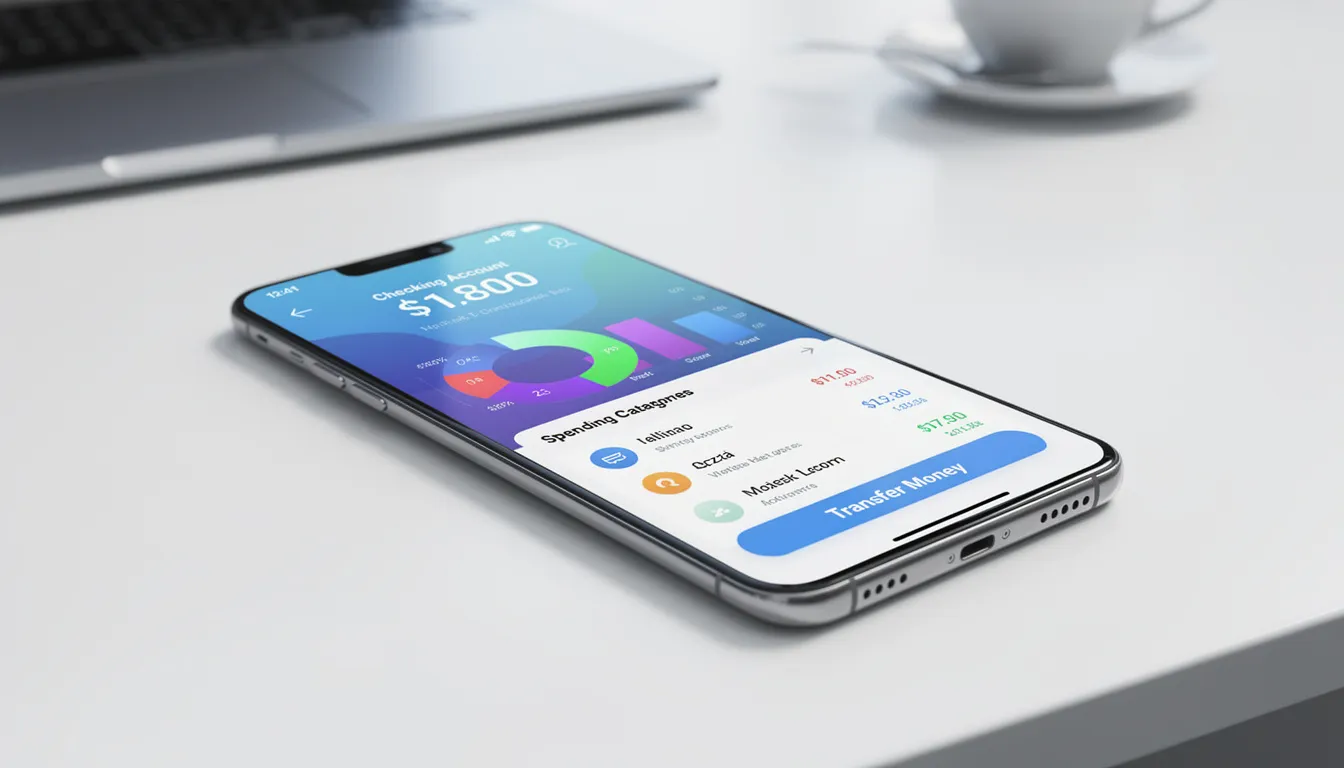
Digital Banking & Neobanking Apps
The line between digital banks and neobanks is regulatory, not experiential. Traditional banks launch digital-only brands (like Goldman’s Marcus). Neobanks either hold their own banking licenses or partner with sponsor banks to offer regulated services.
Examples for reference: Revolut, N26, Chime
Core features:
- Remote account opening with identity verification
- Virtual and physical debit/credit cards
- Salary deposit and direct deposit switching
- Savings vaults and round-up features
- Instant domestic and international transfers
Unit economics hinge on interchange revenue from card transactions, premium subscription tiers, FX fees on international spending, and lending products.
The regulatory structure—own license vs. sponsor bank—significantly affects app design. Licensed neobanks control the full experience. Partner-based models face constraints from the sponsor’s compliance requirements and technology limitations.
Digital Wallets & Payment Apps
Digital wallet apps dominate everyday payments in many markets. Use cases include P2P transfers between friends, merchant payments at checkout, marketplace payouts to sellers, and gig worker disbursements.
US examples: Venmo, Cash App
International examples: Paytm (India), M-Pesa (Kenya)
Stored-value regulations impose limits on wallet balances and require tiered KYC. A user with basic verification might hold $500; full verification unlocks higher limits and more features.
Fraud patterns specific to wallets require dedicated controls: velocity checks preventing rapid-fire transfers, device binding to flag new devices, and social engineering detection for “wrong person” scam patterns.
Embedded finance opportunities arise when wallets integrate into non-financial apps—ride-hailing apps, marketplaces, and gaming platforms all benefit from built-in payment functionality.
Insurance & InsurTech Apps
Insurance apps are reimagining quote comparison, policy issuance, claim filing, and ongoing customer service. The goal: instant everything.
Examples: Lemonade (property insurance), usage-based auto insurance apps
Key capabilities:
- Instant quotes based on minimal input
- Policy issuance in minutes, not days
- Photo-based claim filing
- Telematics-based pricing using driving behavior data
- IoT integration with home sensors for property coverage
Personalization and micro-coverage create new product categories. Per-trip travel insurance, event-based policies, and on-demand coverage for specific items expand beyond traditional annual policies.
Insurance apps face intense regulatory oversight. Clear policy wording, consent management, and disclosure requirements demand close attention to UX copy and compliance integration.
Investment, Wealth & Robo-Advisory Apps
Investment apps have democratized access to stocks, ETFs, bonds, crypto, and thematic portfolios with low minimums—sometimes as little as $1.
Examples: Robinhood, Wealthfront, Betterment
Core functionality:
- Risk questionnaires determining suitable allocations
- Automated rebalancing maintaining target weights
- Tax-loss harvesting to optimize after-tax returns
- Dividend reinvestment
- Clear performance reporting
Regulatory requirements for investment apps are substantial. Suitability checks, clear disclaimers, and educational content for novice investors aren’t optional.
Social investing features—shared watchlists, community feeds, copy trading—create engagement but also compliance risks. When does sharing become recommendation? Legal boundaries require careful navigation.
Lending, BNPL & Microfinance Apps
Mobile-first lending simplifies every step: loan discovery, application, document submission, verification, approval, and disbursal. The best apps complete the entire process in minutes.
Examples: Klarna, Afterpay (BNPL), various small business lending apps
Underwriting approaches:
- Traditional bureau-based using FICO and similar scores
- Cash-flow-based using bank transaction data via open banking
- Alternative data incorporating rent, utilities, and employment history
Automated credit scoring reduces manual review while maintaining accuracy—when done correctly.
Delinquency management flows matter as much as origination. Reminders, restructuring offers, payment plan options, and escalation to collections all require thoughtful UX that balances firmness with empathy.
Consumer protection requirements are extensive: transparent APR disclosure, clear repayment schedules, and affordability checks before approval.
Personal Finance, Budgeting & Planning Apps
These apps aggregate accounts and help users budget, set financial goals, and reduce debt—without being banks themselves.
Examples: YNAB, Mint
Features:
- Envelope budgeting allocating funds to categories
- Zero-based budgeting ensuring every dollar has a purpose
- Debt snowball and avalanche tracking
- Net worth monitoring over time
B2B2C variants see employers offering financial wellness apps as employee benefits—improving financial health reduces stress and improves productivity.
Data privacy expectations are especially high. These apps often have read-only access to multiple bank accounts. Users need confidence their data is secure and won’t be sold or misused.
RegTech & Compliance Apps
RegTech solutions serve banks, brokers, payment institutions, and crypto exchanges struggling with compliance workloads.
Capabilities:
- Transaction monitoring with configurable rules
- Sanctions and PEP screening in real-time
- Case management for investigation workflows
- Suspicious activity reporting
- Regulatory filing automation
Configuration by compliance officers—not just developers—is essential. Visual analytics help identify patterns across alerts.
Frameworks like AMLD6, BSA/AML rules, and FATF recommendations shape feature requirements. Integration patterns range from batch file uploads to real-time streaming from core banking systems.
Crypto, Web3 & Digital Asset Apps
Crypto wallets, exchanges, DeFi interfaces, and NFT marketplaces occupy a distinct regulatory gray zone—but they’re increasingly mainstream.
Key considerations:
- Private key management with clear user responsibility
- Non-custodial vs. custodial model trade-offs
- Seed phrase UX that balances security with usability
- On-ramp/off-ramp integration with fiat payment methods
KYC/AML requirements apply to crypto just like traditional finance—often more strictly as regulators catch up.
Regulatory uncertainty varies by region. Building flexible compliance strategies that can adapt to evolving rules is essential for longevity.
Extra security measures include hardware wallet support, multisig requirements for large transactions, and transaction simulations showing exactly what a smart contract interaction will do before the user signs.
Key Steps to Develop a Fintech Application
Building a fintech application follows a structured lifecycle: discovery, compliance planning, design, development, testing, launch, and iteration. Each phase requires more rigor than typical consumer app development.
Timelines range from 3-4 months for a focused MVP to 12-18 months for a full-scale banking platform. The development process we outline below helps avoid common pitfalls like late compliance reviews, underestimated data migration complexity, and security issues discovered after launch.

Define the Niche, Users & Value Proposition
Every successful fintech app solves a specific problem for a defined audience. “Banking for everyone” isn’t a strategy—it’s a way to compete with every major bank and neobank simultaneously.
Examples of focused niches:
- SMB invoicing and cash flow management in the US
- Gen Z savings and investing in Europe
- Gig worker financial management in Latin America
- Cross-border payments for freelancers globally
Create proto-personas describing your target users: age, income level, digital literacy, typical financial behaviors, and current solutions they use. What problem are you solving? Why will users switch from their current provider?
Key questions to answer:
- What metrics define success? (Activation rate, retention, AUM, transaction volume)
- Who are the main competitors and what are their pricing models?
- What gaps exist that you can exploit?
Early discussions with regulators or banking-as-a-service partners help validate feasibility before significant investment. Discovering licensing requirements after building is expensive.
Plan for Legal, Licensing & Compliance
Work with legal counsel early to determine your regulatory path. Options include:
- Obtaining your own license (e-money, lending, broker-dealer depending on product)
- Partnering with licensed entities who provide regulatory coverage
- Operating in categories that don’t require licensing (pure aggregation, financial education)
Typical compliance frameworks by region:
| Region | Key Frameworks |
|---|---|
| Global | PCI DSS (card data), AML/CFT, KYC |
| EU | PSD2, GDPR, AMLD |
| US | State licensing, CCPA, FFIEC guidance |
| UK | FCA authorization, Open Banking |
Build a regulatory matrix mapping each obligation to specific features, data flows, and technical controls. This becomes the compliance backbone for the entire development process.
Include compliance requirements in user flow design. KYC during onboarding? Feature unlock after verification? The UX implications are significant.
Create policy documents (KYC policy, AML policy, privacy policy) and link them directly to in-app copy during onboarding and consent flows.
Design Product Architecture & UX
Product managers, architects, security specialists, and UX designers must collaborate from the start. Decisions made now affect everything downstream.
Architecture decisions to address:
- Monolith vs. microservices (monolith often better for initial MVP)
- Event streaming for audit trails and integration
- Read/write segregation for scalability
- Caching strategies for frequently accessed data
UX deliverables:
- User journey maps for primary flows
- Wireframes showing information architecture
- Clickable prototypes for user testing
- Design systems with reusable components
Specific flows need extra attention: onboarding (where users form first impressions), account recovery (where frustrated users churn), card replacement, dispute filing, and consent management.
Design for observability from the start. Logging, metrics, and distributed tracing enable debugging issues in production—essential when users are experiencing problems with their money.
Build the MVP & Integrate Third-Party APIs
MVP scope should include only the core flows that prove value. For a digital wallet:
- Create account with basic KYC
- Link bank account or card
- View balance and transaction history
- Make a P2P payment
That’s it. Everything else comes later.
Common third-party integrations:
| Category | Examples |
|---|---|
| KYC | Identity verification, document OCR |
| Bank data | Plaid, Tink, open banking APIs |
| Payments | Stripe, Adyen, local payment schemes |
| Cards | Card issuers, token providers |
| Notifications | Push, SMS, email providers |
Development best practices for fintech software development:
- CI/CD pipelines with automated testing gates
- Mandatory code reviews for all changes
- Feature flags enabling gradual rollouts
- Infrastructure-as-code for reproducible environments
Secure API design requires authentication on every endpoint, rate limiting to prevent abuse, thorough input validation, and versioning for backward compatibility.
A realistic timeline for a wallet MVP with basic KYC in a single country: 12-16 weeks with a development team of 4-6 engineers.
Testing, Security Audits & Compliance Validation
Testing in fintech goes beyond typical QA. The stakes are higher.
Test types required:
- Unit tests for individual components
- Integration tests for service interactions
- End-to-end tests simulating complete user flows
- Performance tests validating capacity under load
- Security testing including penetration testing
- User acceptance testing with pilot users
Static application security testing (SAST) catches vulnerabilities in code. Dynamic testing (DAST) finds issues in running applications. Dependency scanning identifies vulnerable libraries—critical given supply chain attacks.
External penetration tests by certified firms are typically required. For regulated products, audits for PCI DSS, SOC 2, or ISO 27001 may be mandatory.
Test scenarios should simulate high-volume days (salary disbursement days, Black Friday for e-commerce payments) and failure modes (payment provider downtime, database failover). How does the system behave when things go wrong?
Data migration tests are essential if integrating with or replacing legacy systems. Migration failures cause launch delays and data integrity issues that undermine user trust.
Launch, Monitor & Iterate
Launch doesn’t mean flipping a switch for everyone simultaneously. Phased rollouts reduce risk:
- Internal beta with employees and friends/family
- Limited regional launch or waitlist
- Gradual expansion with monitoring at each stage
- Full public release
Observability setup includes:
- Uptime and availability dashboards
- Response time and latency metrics
- Error rates by endpoint and severity
- Transaction success rates by payment type and provider
- Business metrics (signups, activation, transaction volume)
Collect qualitative and quantitative feedback through analytics tools, NPS surveys, and support ticket analysis. What features do users request? Where do they drop off? What causes confusion?
Agile iteration means short release cycles—typically every 1-2 weeks. Prioritize improvements to KYC pass rates, reduction in onboarding drop-offs, and feature requests that align with business goals.
Compliance monitoring never stops. Regulations evolve. Provider rules change. Anti money laundering requirements expand. Build ongoing review into operational processes.
Security, Compliance & Risk Management in Fintech Apps
Security and compliance aren’t features—they’re the foundation. Everything else builds on top. Failing here doesn’t just mean bad reviews; it means regulatory action, fraud losses, and potential business failure.
Security Architecture & Hardening
Defense in depth means multiple security layers, each providing protection if others fail.
Infrastructure security:
- Network segmentation isolating sensitive systems
- Web application firewalls (WAFs) filtering malicious traffic
- API gateways enforcing authentication and rate limits
- Least-privilege IAM preventing excessive access
- Secrets management keeping credentials out of code
Data protection:
- Encryption at rest using AES-256 or equivalent
- Key rotation on regular schedules
- Tokenization replacing card and PII data with non-sensitive tokens
- Secure backup storage with access controls
Mobile app hardening:
- Code obfuscation making reverse engineering difficult
- Jailbreak and root detection refusing to run on compromised devices
- Secure local storage using device keychains and secure enclaves
- Certificate pinning preventing man-in-the-middle attacks
Secure development lifecycle (SDLC) includes threat modeling during design—not after development. What could go wrong? How do we prevent it?
Regular security training for developers builds awareness. Mandatory security reviews for high-risk code (payments, authentication, admin functions) catch issues before they reach production.
Fraud Monitoring & Transaction Risk Controls
Real-time fraud scoring evaluates every transaction against multiple signals:
- Device fingerprint and reputation
- IP address reputation and geolocation
- Behavioral patterns compared to user history
- Historical fraud data across the platform
Typical controls:
| Control | Purpose |
|---|---|
| Velocity limits | Prevent rapid-fire fraudulent transfers |
| Geofencing | Flag transactions from unusual locations |
| 3D Secure | Add authentication for card payments |
| Step-up authentication | Require MFA for high-risk actions |
Visual tooling for fraud teams enables non-technical analysts to investigate cases, configure rules, and see patterns across alerts.
Integration with consortium data sources and industry blacklists helps identify known bad actors before they cause damage.
One payment client reduced chargebacks by 67% after implementing enhanced fraud scoring that combined device fingerprinting with behavioral analysis.
Data Privacy & Governance
Data classification determines protection levels:
- Public: Marketing content, public documentation
- Internal: Business operations data
- Confidential: Customer PII, transaction data
- Highly sensitive: Credentials, encryption keys, authentication tokens
GDPR and CCPA obligations:
- Explicit consent for data collection
- Data minimization—collect only what’s needed
- Right to access—users can request their data
- Right to deletion—users can request removal
- Data portability—users can export their information
Analytics and BI pipelines require anonymization or pseudonymization. Aggregate insights shouldn’t expose individual users.
Data retention policies must be documented and enforced. How long do you keep KYC documents? Transaction logs? Communication history? Different categories have different requirements.
Cross-border data transfer adds complexity. EU data residency requirements may prohibit storing European customer data on US servers without appropriate safeguards.
Compliance-by-Design & Audit Readiness
Embedding regulatory controls in code and configuration—rather than relying on manual checklists—ensures consistent enforcement.
Evidence collection for audits:
- Comprehensive logs of security-relevant events
- Approval records for sensitive operations
- Configuration change history
- Regular compliance reports
Automated checks using policy-as-code tools verify infrastructure configuration against security baselines. Drift detection alerts when systems deviate from compliant states.
Regulatory change management tracks updates to relevant regulations and triggers reviews of both policy documents and technical implementation.
A lending startup we worked with avoided a 3-month launch delay by building compliance controls into the initial architecture rather than retrofitting them after the first regulatory review.
Tech Stack for Fintech App Development
Technology choices affect security, scalability, time-to-market, and hiring. The right tech stack balances proven reliability with development velocity.
Frontend Technologies
Web development options:
| Framework | Strengths | Considerations |
|---|---|---|
| React | Large ecosystem, flexible | Requires careful architecture |
| Angular | Enterprise-grade, opinionated | Steeper learning curve |
| Vue | Gentle learning curve, performant | Smaller talent pool |
Cross-platform mobile:
- React Native: Faster development, especially if web team uses React
- Flutter: Better performance, growing ecosystem, single codebase for iOS/Android/web
Selection criteria include performance requirements, existing team skills, and ecosystem maturity. Security concerns specific to frontend include XSS protection, Content Security Policy headers, and secure handling of tokens on the client.
Design system implementation with component libraries ensures visual consistency and speeds future development. Server-side rendering or static site generation may be appropriate for dashboard or marketing components.
Backend, APIs & Microservices
Common languages and frameworks:
| Technology | Best For |
|---|---|
| Node.js | Real-time APIs, high concurrency |
| Java (Spring Boot) | Enterprise systems, compliance-heavy environments |
| .NET | Microsoft ecosystem, enterprise |
| Go | High-performance critical paths |
| Python | AI/ML workloads, data processing |
REST APIs remain the standard for external interfaces. GraphQL offers flexibility for complex client requirements. Internal service communication uses gRPC or message queues for performance and reliability.
Architectural patterns for fintech:
- Idempotent operations preventing duplicate payments
- Eventual consistency with saga patterns for distributed transactions
- API gateways centralizing authentication and rate limiting
- OAuth 2.0 and OpenID Connect for authorization
Domain-driven design (DDD) with bounded contexts helps manage complexity in large financial systems. Payments, accounts, and lending each have distinct models that shouldn’t be tightly coupled.
Databases, Storage & Caching
Relational databases like PostgreSQL and MySQL remain the backbone for transactional data. ACID compliance guarantees are essential when dealing with financial transactions—eventual consistency isn’t acceptable for account balances.
NoSQL options serve specific purposes:
- MongoDB for flexible document storage
- DynamoDB for high-scale event logs
- Time-series databases for market data
Caching with Redis or Memcached reduces latency for non-sensitive, frequently accessed data. Session storage, feature flags, and rate limiting state benefit from in-memory speed.
Data warehouses (Snowflake, BigQuery, Redshift) enable analytics and ML model training without impacting production database performance.
Backup strategies must include point-in-time recovery (PITR) and multi-region replication for disaster recovery. Financial data loss is catastrophic.
Cloud Infrastructure, DevOps & Observability
Major cloud providers (AWS, Azure, GCP) offer the services fintech apps need: managed databases, security tooling, compliance certifications, and global reach.
Containerization and orchestration:
- Docker for consistent environments across development and production
- Kubernetes for orchestrating microservices at scale
- Managed Kubernetes (EKS, AKS, GKE) reducing operational overhead
CI/CD pipelines using GitHub Actions, GitLab CI, or Azure DevOps automate testing and deployment. Every commit triggers automated tests; every merge to main deploys to staging.
Observability stack:
- Logging: ELK stack (Elasticsearch, Logstash, Kibana) or cloud-native alternatives
- Metrics: Prometheus with Grafana, or CloudWatch/Azure Monitor
- Tracing: Jaeger or OpenTelemetry for distributed tracing
Cost management through tagging, budgeting alerts, and autoscaling prevents cloud bills from spiraling unexpectedly.
AI, ML & Advanced Analytics in Fintech
Machine learning powers fraud detection, credit scoring, personalization, and trading strategies. The fintech industry increasingly relies on AI to improve both operations and user experience.
Use cases:
| Application | Approach |
|---|---|
| Fraud detection | Real-time classification of transactions |
| Credit scoring | Predictive models using alternative data |
| Personalization | Recommendation engines for products and insights |
| Risk modeling | Portfolio and loan risk assessment |
Typical tooling:
- Python as the primary language
- scikit-learn for classical ML
- TensorFlow or PyTorch for deep learning
- MLOps platforms (MLflow, SageMaker) for model lifecycle management
Responsible AI concerns are significant in finance. Bias in lending models creates legal and reputational risk. Explainability tools like SHAP help demonstrate why models make specific decisions—increasingly required by regulators.
Real-time model scoring (sub-100ms latency) applies to fraud detection. Batch scoring overnight works for credit decisioning and portfolio analysis.
A 2023 deployment of ML-based document verification reduced manual KYC review workload by 78% while improving verification accuracy.
Fintech App Development Costs & Timelines
Realistic 2024-2026 cost expectations range from $50,000 for a simple MVP to $300,000+ for a full-featured banking platform. Understanding what drives costs helps set appropriate budgets and expectations.
Main Cost Drivers
Key factors affecting cost:
| Factor | Impact |
|---|---|
| App type | Wallet simpler than full banking platform |
| Platforms | iOS + Android + web costs more than single platform |
| Countries | Multi-jurisdiction means multiple compliance frameworks |
| Integrations | Each third-party API adds cost and complexity |
| Design | Custom design costs more than templates |
| Compliance | Regulated products require more security and documentation |
Third-party integration and licensing fees add up quickly. KYC providers charge per verification. Card issuers have setup fees and per-transaction costs. Data aggregators charge monthly fees based on connected accounts.
The trade-off between building in-house versus partnering with specialized fintech app developers affects both initial and ongoing costs. Internal teams avoid vendor margins but require hiring, training, and retention investment.
Example scenario: A single-country P2P wallet MVP with basic KYC, card linking, P2P transfers, and transaction history might cost $75,000-$120,000 with a 14-18 week timeline using an experienced fintech development partner.
Typical Timelines & Phasing
Sample timeline breakdown:
| Phase | Duration |
|---|---|
| Discovery & planning | 4-6 weeks |
| Design | 4-8 weeks (can overlap with discovery) |
| Core development | 8-16 weeks |
| Security hardening & compliance | 4-6 weeks |
| Testing & QA | 4-6 weeks (overlaps with development) |
| Launch preparation | 2-4 weeks |
Dependencies that commonly delay projects:
- Slow banking partner or BaaS provider onboarding
- Compliance approvals taking longer than expected
- Third-party API integration issues
- App store review cycles for financial apps (particularly Apple)
Parallelizing workstreams accelerates delivery when managed well. Design, legal review, and backend service development can proceed simultaneously if coordination is tight.
Early technical spikes de-risk critical integrations. Proving that the KYC provider integration works before committing to a timeline prevents surprises in month three.
Why Partner with a Specialized Fintech App Development Company
Generic app development and regulated fintech product delivery require fundamentally different capabilities. A team that builds excellent e-commerce apps may struggle with PCI DSS compliance, banking API integration, and fraud prevention systems.
Specialized fintech app development services reduce risk, accelerate launch, and improve compliance outcomes. Here’s what that means in practice.
Expertise Across Domains & Regulations
A specialist financial app development company brings multi-domain knowledge spanning banking, payments, wealth management, lending, and crypto. This breadth means understanding how decisions in one area affect others.
Regulatory familiarity includes:
- PCI DSS for card data
- PSD2 and Open Banking for European markets
- GDPR and data privacy frameworks
- SOC 2 and ISO 27001 for enterprise requirements
- Local banking rules and licensing requirements
This knowledge reduces rework. Requirements that would blindside a generalist team are anticipated and addressed in initial architecture.
Systems designed for audit readiness pass regulatory reviews on the first attempt rather than requiring emergency remediation.
Battle-Tested Architectures & Accelerators
Experienced fintech software developers bring reusable components that accelerate delivery:
- Onboarding modules with configurable KYC flows
- Notification engines supporting push, SMS, email, and in-app channels
- Risk scoring templates adaptable to specific use cases
- Prebuilt integrations with common KYC, payment, and banking providers
Performance-tuned reference architectures already proven in production handle transaction volumes confidently. Building these from scratch adds months and risk.
Future expansion—multi-currency, multi-entity, cross-border rollouts—is considered in initial design rather than requiring expensive refactoring later.
Long-Term Support, Scaling & Optimization
The relationship doesn’t end at launch. App developers focused on fintech provide ongoing support:
- Production monitoring and incident response
- Issue resolution with understanding of business context
- Feature roadmapping based on market feedback
- Performance optimization as volume grows
Capacity planning for traffic spikes (product launches, marketing campaigns, new market entries) prevents outages that damage reputation and regulatory standing.
Continuous improvement includes A/B testing user flows, improving KYC pass rates, reducing unit costs through operational efficiency, and implementing new features as the finance industry evolves.
Knowledge transfer—comprehensive documentation, training sessions for client teams, governance frameworks—ensures long-term maintainability regardless of ongoing engagement.
Looking ahead, trends like embedded finance, instant payments, open banking solutions, and AI-driven personalization will reshape user expectations. A development partner already working on these problems helps clients stay ahead rather than playing catch-up.
Key Takeaways
Building a successful fintech app requires more than technical skills. It demands deep regulatory knowledge, security expertise, and proven architectures developed through experience with real financial products.
- Services span the full lifecycle: From discovery through launch and ongoing optimization, fintech development addresses mobile banking, wallets, lending, investments, and compliance platforms
- Features must balance security and UX: Users expect bank-grade security with consumer-app simplicity
- Tech stack choices matter: PostgreSQL, React/Flutter, Node.js/Java, and cloud infrastructure form the foundation for most fintech applications
- Development takes 4-18 months: MVPs can launch in 3-4 months; full-featured platforms require 12+ months
- Costs range from $50K to $300K+: Complexity, compliance requirements, and integration depth drive costs
- Specialized partners reduce risk: Domain expertise, reusable components, and regulatory knowledge accelerate delivery and improve outcomes
The fintech industry moves fast. Whether you’re building digital wallets, investment apps, or next-generation banking solutions, the right development approach makes the difference between business growth and expensive lessons.
If you’re planning a fintech application development initiative—whether a greenfield platform or modernizing legacy systems—we’d welcome a conversation about your specific requirements and how our experience might help.
Digital Transformation Strategy for Siemens Finance
Cloud-based platform for Siemens Financial Services in Poland


You may also like...

Value-Added Services (VAS) Examples
By 2026, most core services — data plans, current accounts, cloud hosting — have become fully commoditized, and the companies winning customer loyalty aren't the ones cutting prices. They're the ones layering smart value-added services (VAS) on top: carbon footprint trackers in banking apps, smart-home bundles from ISPs, AI copilots inside SaaS platforms, and Amazon Prime-style subscriptions that turn one-time buyers into long-term subscribers. This guide breaks down concrete VAS examples across telecom, banking, retail, and SaaS, explains why operators offering VAS see up to 30% ARPU uplift, and gives you a practical 5-step framework to identify which value-added services will actually move the needle for your product.
Alexander Stasiak
May 01, 2026・11 min read

Embedded Finance Examples: Real-World Use Cases Across Industries
Embedded finance brings payments, lending, banking, insurance, and investing directly into the apps people already use. Here are real-world examples across industries—and what makes them work.
Alexander Stasiak
Feb 13, 2026・12 min read

Fintech Software Development Company
A fintech software development company builds secure, compliant financial products—from MVPs to core platforms—covering discovery, design, engineering, integrations, and long-term support.
Alexander Stasiak
Jan 26, 2026・9 min read
Ready to centralize your know-how with AI?
Start a new chapter in knowledge management—where the AI Assistant becomes the central pillar of your digital support experience.
Book a free consultationWork with a team trusted by top-tier companies.